


Injection Quills vs Sample Quills: Key Differences for Accurate Industrial Dosing Systems
In the complex world of industrial fluid handling, precision is the difference between a high-performing plant and a maintenance nightmare. Whether you are managing a high-pressure boiler feed in a power plant or a water treatment facility, the hardware you choose for your Chemical Dosing Systems determines your operational efficiency.
Two of the most critical yet often misunderstood components in these systems are Injection Quills and Sample Quills. While they may look similar at a glance, their internal designs, flow dynamics, and functions are diametrically opposed.
At Dosimix Technologies, an ISO-certified leader in process engineering solutions, we’ve seen how choosing the wrong quill can lead to chemical wastage, pipe corrosion, or inaccurate lab data. This guide breaks down everything you need to know to optimize your Industrial Dosing System.
Why Quills Matter in Industrial Dosing Systems
In any chemical injection system or online sampling system, the interface between the process pipeline and external equipment is a sensitive zone. Improper injection or sampling can result in:
- Incomplete chemical mixing
- Chemical backflow and equipment damage
- Localized corrosion at injection points
- Inaccurate analysis and poor process control
- Increased operating and maintenance costs
This is where properly engineered quills play a vital role. They ensure controlled interaction between the chemical dosing system or sampling line and the main process stream.
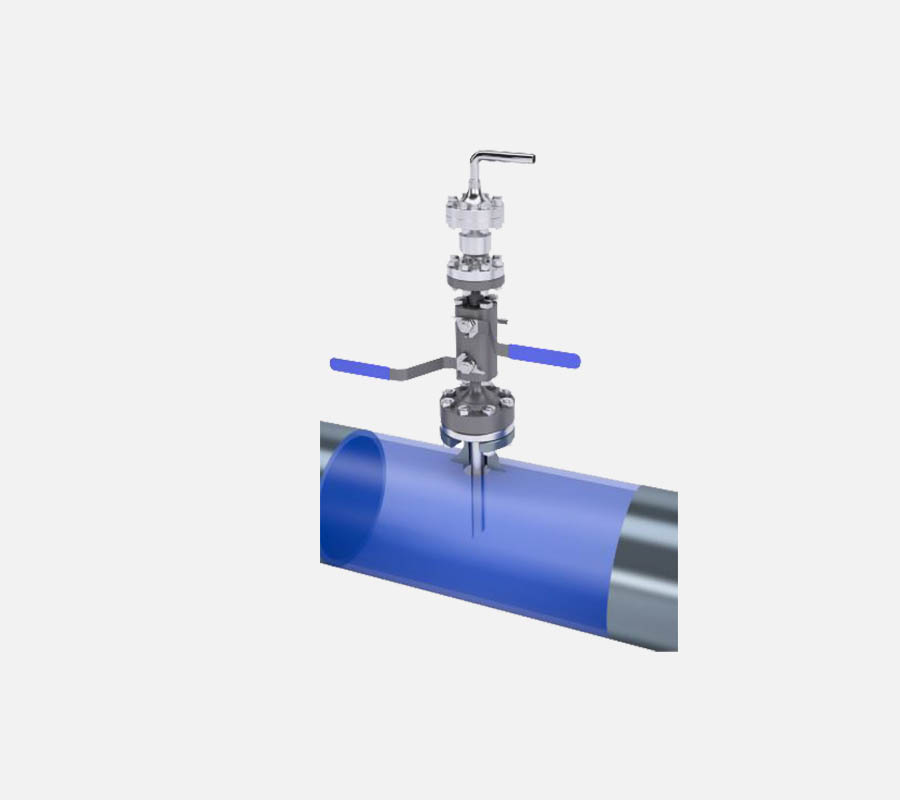
What is an Injection Quill?
An injection quill is a specialized component designed to deliver chemicals into the center of a process stream. Instead of simply dripping chemicals onto the pipe wall—which can lead to “channeling” and localized corrosion—the injection quill ensures that the chemical enters the flow at the highest velocity point (the center).
The Mechanics of Chemical Injection Quills
Chemical Injection Quills typically feature an integral check valve to prevent the process fluid from flowing back into the chemical feed line. They are often cut at a 45-degree angle (the “beveled tip”) to facilitate better mixing and prevent the “dragging” of chemicals along the quill body.
Key Benefits:
- Protection of Pipe Integrity: By keeping concentrated chemicals away from the pipe wall, you prevent “hot spot” corrosion.
- Optimal Mixing: Injecting into the core of the stream ensures the chemical is dispersed immediately by the turbulence.
- Reduced Wastage: Accurate delivery means you use less chemical to achieve the desired process result.
What is a Sample Quill?
While an injection quill is about putting things in, Sampling Quills in Process Industries are all about taking things out—safely and accurately.
A sample quill extends into the process pipe to capture a representative sample of the fluid. If you were to take a sample from a simple tap on the side of a pipe, you might only get the “boundary layer” fluid, which often contains more sediment, lower velocities, and different chemical concentrations than the bulk fluid.
Why Sampling Precision Matters
In Water treatment dosing equipment or Oil & Gas pipelines, process control depends on the data from these samples. If your sample isn’t representative, your entire Process control system is flying blind.
Injection Quills vs Sample Quills: The Critical Differences
Understanding the nuances between these two is vital for any Process Engineer or Plant Manager.
Feature | Injection Quill | Sample Quill |
Primary Purpose | Deliver chemicals into the stream. | Extract fluid for analysis. |
Flow Direction | Outward (From feed line to process). | Inward (From process to lab/analyzer). |
Check Valve | Usually included to prevent backflow. | Never included (would block extraction). |
Tip Design | Beveled (45°) to improve dispersion. | Often straight-cut or slotted for representative capture. |
Typical Use Case | Dosing biocides, scale inhibitors, acids. | Monitoring pH, conductivity, or oil-in-water. |
Solving Real-World Problems in Dosing Systems
1. Eliminating “Wall Effect” Corrosion
In many Chemical Dosing Systems, chemicals like sulfuric acid or chlorine are highly corrosive. When injected via a simple NPT nipple, the chemical clings to the pipe wall. Over time, this results in a pipe failure. Industrial chemical injection using a quill from Dosimix Technologies ensures the acid is “sheared” off by the process flow, keeping your infrastructure safe.
2. Enhancing Process Control
For Power Plant Operators, maintaining the right chemistry in boiler feed water is a balancing act. If your Dosing system components include a poorly placed sample tap, your sensors might report a higher or lower concentration than what is actually hitting the boiler tubes. A sample quill ensures that the water being analyzed is the same water circulating through the system.
3. Handling High-Pressure Environments
In the Oil & Gas sector, High-pressure chemical injection requires hardware that can withstand extreme mechanical stress. Injection quills are subject to “vortex shedding”—vibrations caused by the fluid rushing past the quill. Dosimix Technologies designs quills with calculated insertion lengths and heavy-duty materials to prevent fatigue failure.
Industries Where Quills Play a Critical Role
Water & Wastewater Treatment
Precise injection of disinfectants, coagulants, and pH correction chemicals depends on well-designed injection quills. Reliable sampling quills support online analyzers and compliance monitoring.
Oil & Gas
High-pressure chemical injection systems rely on robust injection quills to safely introduce corrosion inhibitors, biocides, and scale inhibitors.
Power Plants
Injection and sampling quills support boiler chemistry control, cooling water treatment, and turbine protection.
Process Industries
Chemical plants, refineries, and EPC-driven projects require engineered quills as standard components in industrial dosing systems.
Materials Matter: Choosing Corrosion-Resistant Quills
The performance of your Industrial Dosing System is only as good as the materials used. Depending on the chemical being handled, you might require:
- Stainless Steel (SS316/316L): Standard for water treatment and mild chemicals.
- Hastelloy C276: Essential for highly corrosive acids and bleach.
- PVC/CPVC/PVDF: Ideal for low-pressure, highly reactive chemical applications.
At Dosimix Technologies, we specialize in manufacturing quills from exotic alloys and high-grade polymers, ensuring longevity even in the harshest industrial environments.
Best Practices for Installation and Maintenance
To get the most out of your Injection Quills and Sample Quills, follow these engineering best practices:
- Insertion Length: The tip of the quill should ideally reach the center one-third of the pipe diameter.
- Orientation: For injection quills, the beveled tip should face the oncoming flow to maximize turbulence and mixing.
- Velocity Limits: Ensure the flow velocity doesn’t exceed the quill’s mechanical limits to avoid snapping due to vibration.
- Regular Inspection: Even Corrosion-resistant quills should be pulled and inspected annually for scale buildup or tip erosion.
Why Choose Dosimix Technologies?
As a leading manufacturer and supplier in India, Dosimix Technologies provides more than just hardware; we provide process certainty. Our ISO-certified manufacturing process ensures that every quill—whether for a standard water treatment plant or a complex refinery—meets global safety and quality standards.
We understand the pressures faced by EPC Contractors and Procurement teams. You need components that are reliable, delivered on time, and backed by technical expertise.
Our Range Includes:
- Custom-engineered Chemical Injection Quills
- High-accuracy Sample Quills
- Complete Chemical Dosing Systems
- Retractable Quills for “online” maintenance without system shutdown
Final Thoughts
While often overlooked, Injection Quills and Sample Quills play a decisive role in the efficiency, safety, and accuracy of chemical dosing systems. Understanding the differences between Injection Quills vs Sample Quills helps engineers and decision-makers avoid costly mistakes and optimize process performance.
If your facility is facing challenges with inaccurate dosing, inconsistent sampling, or premature equipment failure, the root cause may lie at the injection or sampling point—not the pump or analyzer.
Dosimix Technologies works closely with process engineers, plant managers, and EPC contractors to design reliable, application-specific quill solutions that support long-term operational excellence.
Are you looking to upgrade your dosing or sampling setup?
Don’t leave your process to chance. Contact the experts at Dosimix Technologies today for a technical consultation. Whether you need a single custom quill or a complete skid-mounted dosing solution, our team is ready to help you achieve precision.
👉 Request a Quote from Dosimix Technologies – India’s Trusted Dosing Experts
Contact Us : +91 76007 37948 , sales@dosimixtechnologies.com
FAQs
An injection quill is used to introduce chemicals into the center of a process pipeline, while a sample quill is designed to extract a representative fluid sample from the process stream for analysis. Their flow direction, internal design, and purpose are completely different.
Injection quills ensure accurate chemical dispersion, prevent chemicals from contacting the pipe wall, and reduce corrosion, backflow, and chemical wastage. They are essential for maintaining efficiency and safety in industrial chemical dosing systems.
No. A sample quill should never be used for chemical injection. Sample quills lack check valves and are not designed to handle outward chemical flow, which can lead to backflow, inaccurate dosing, and serious equipment damage.
Injection quills include an integral check valve to prevent process fluid from flowing back into the chemical dosing line. This protects dosing pumps, tubing, and storage tanks from contamination or pressure damage.
A sample quill extends into the core flow of the pipeline, avoiding stagnant boundary layers near the pipe wall. This ensures the collected sample accurately represents the actual process conditions used for process control and compliance monitoring.
Injection and sample quills are widely used in water and wastewater treatment, oil & gas, power plants, chemical processing, refineries, and EPC projects, where precise dosing and reliable sampling are critical to operations.
Without an injection quill, chemicals often strike the pipe wall directly, causing localized corrosion, poor mixing, chemical channeling, higher chemical consumption, and premature pipe failure.
Best practice is to insert the quill so that the tip reaches approximately one-third to the center of the pipe diameter, ensuring optimal mixing for injection or representative sampling for analysis.
Material selection depends on chemical compatibility and pressure conditions. Common options include SS316/316L for water treatment, Hastelloy C276 for highly corrosive chemicals, and PVC, CPVC, or PVDF for low-pressure chemical applications.
Dosimix Technologies offers custom-engineered, ISO-certified injection and sample quills designed for high accuracy, corrosion resistance, and long service life, backed by strong application engineering support for industrial dosing systems.