

Poly Electrolyte Dosing System
Industrial wastewater treatment, STP/ETP operations, sludge management, and municipal water treatment plants rely heavily on polymers for coagulation, flocculation, and sludge conditioning. But polymers are extremely sensitive chemicals—if they are not mixed, activated, and dosed correctly, they can fail to form flocs, increase treatment cost, and even damage downstream equipment.
This is why industries depend on a Poly Electrolyte Dosing System, a specialized unit designed to mix, dissolve, activate, and dose polymers with high precision. In India, the demand for polymer dosing systems has increased significantly due to rising wastewater treatment standards, automation needs, and compliance requirements.
This detailed guide will help buyers, engineers, plant operators, and procurement teams understand everything about polymer dosing systems while evaluating the best solution for their plant. With a strong emphasis on accuracy, reliability, and engineering quality, Dosimix Technologies has emerged as one of the preferred manufacturers of poly electrolyte dosing systems in India.
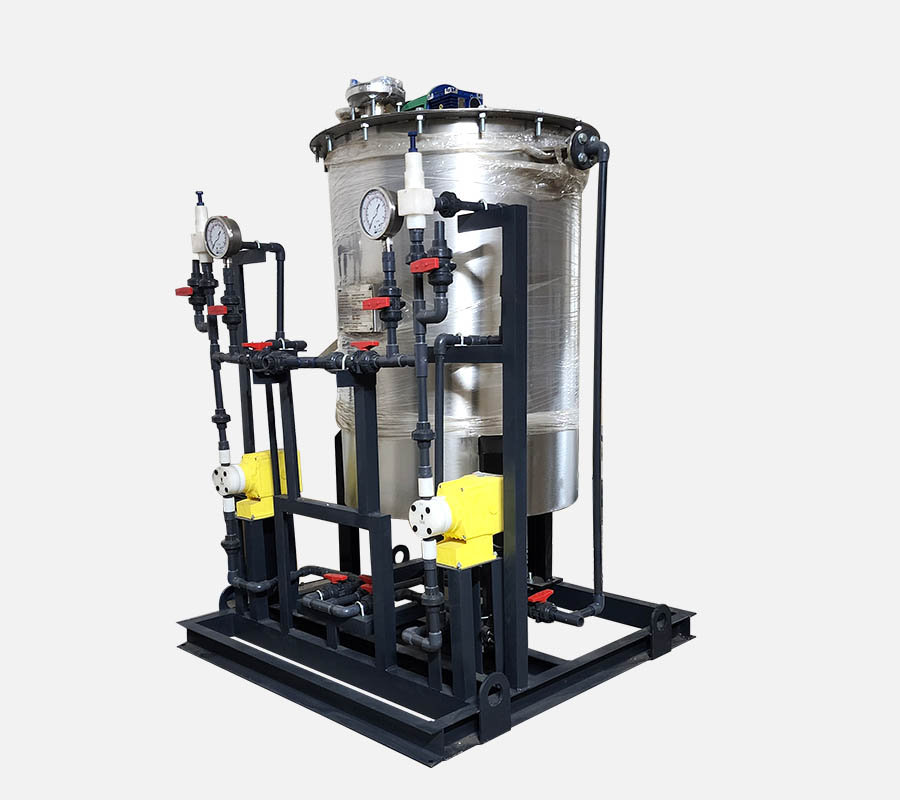
What is a Poly Electrolyte Dosing System?
A Poly Electrolyte Dosing System (also known as polymer preparation unit, polymer make-up system, or PAM dosing system) is a mechanical and automated equipment designed to prepare and dose polymer solutions into water or wastewater treatment processes.
Polymers such as cationic, anionic, and non-ionic poly electrolytes are widely used as flocculants for:
- Sludge dewatering
- Coagulation/flocculation
- Effluent treatment
- Settling and clarification
- Solid-liquid separation
A polymer works effectively only when it is properly activated. If it is under-mixed or over-mixed, its molecular chain breaks, resulting in low floc formation and high chemical consumption.
This is why industries use polymer dosing units to ensure the right concentration, aging time, hydration level, and dosing rate.
A professional system also reduces manual handling, improves consistency, and ensures smooth plant operation.
How a Poly Electrolyte Dosing System Works
Understanding the working principle is essential for selecting the right system for your plant. A typical polymer dosing skid performs the following functions:
Polymer Feeding
Polymers can be in two forms:
- Powder polymer (dry form)
- Liquid polymer (emulsion form)
Depending on the system, they are fed into the preparation unit using:
- Screw feeder (for powder polymer)
- Dosing pump or flow controller (for liquid polymer)
Wetting & Dispersion
Powder polymers cannot be added directly into water—they need proper wetting to avoid lump formation.
A wetting funnel or eductor ensures correct hydration.
Liquid polymers also need controlled dilution before activation.
Mixing & Activation
The polymer solution is then mixed inside a multi-chamber tank system which may include:
- Primary wetting chamber
- Maturation/aging chamber
- Ready solution tank
Agitators ensure thorough but gentle mixing, preventing polymer chain breakage.
Aging time is extremely important for proper polymer activation—typically 25 to 45 minutes depending on polymer grade.
Storage & Dilution
After activation, the polymer solution is kept at a controlled concentration and is continuously available for dosing.
Automatic level sensors ensure:
- Low-level alarm
- High-level cut-off
- Auto refilling cycle
Dosing into Process
Finally, the activated polymer is dosed into:
- Flash mixer
- Clarifier
- Thickener
- Sludge dewatering machine
- Filter press
- DAF unit
Dosing is done using a precise metering pump such as:
- Diaphragm dosing pump
- Plunger dosing pump
- Electronic dosing pump
Flow can also be controlled through a VFD or PLC.
Types of Poly Electrolyte Dosing Systems
To choose the correct system, it is important to understand the various types available in India. Each system is designed for specific polymers, flow rates, and automation levels.
Powder Polymer Dosing System
Ideal for:
- Sludge dewatering
- STP/ETP
- Large treatment plants
- High polymer consumption
Features:
- Screw feeder
- Wetting funnel
- Multi-stage mixing tanks
- High accuracy preparation
- Zero lump formation
Liquid Polymer Dosing System
Suitable for industries that use:
- Liquid flocculants
- Emulsion polymers
Advantages:
- Easy handling
- No powder dust
- Faster preparation
- Low maintenance
Automatic Polymer Preparation System
Also called Fully Automatic Polymer Make-Up Unit.
Best for:
- Municipal water treatment
- Continuous industrial plants
- Zero operator involvement
- High accuracy requirement
Benefits:
- Automated feeding
- Auto mixing cycle
- Level-controlled activation
- Consistent solution quality
Continuous Polymer Make-Up Unit
Designed for uninterrupted polymer supply.
Key features:
- Always-running mixing cycle
- Suitable for large ETP/STP
- No downtime
- Stable concentration control
Batch-Type Polymer Preparation System
Ideal for:
- Medium-size industries
- Intermittent operation plants
- Low polymer demand
This system prepares a fixed batch and stores it for dosing.
Skid Mounted Poly Electrolyte Dosing Packages
A compact, plug-and-play solution with:
- Tanks
- Pumps
- Piping
- Electrical panel
- Instruments
- Control automation
Completely pre-assembled, tested, and easy to install.
Key Components of a Poly Electrolyte Dosing System
A high-performance system includes the following components:
1. Dry Powder Feeder / Liquid Polymer Feeder
Ensures accurate polymer feeding without human error
2.Wetting Cone or Eductor Funnel
Prevents polymer lumping and improves hydration.
3.Multi-Chamber Tanks
For dilution, mixing, aging, and activation.
4.High-Efficiency Agitators
Designed for slow, uniform mixing without damaging polymer chains.
5.Dosing Pumps
Diaphragm or plunger pumps ensure precise dosing rates.
6.Transfer Pumps
Move prepared solution into the dosing line.
7.Sensors & Level Controllers
Fully automatic system operation.
8.PLC/Control Panel
For automation, alarms, interlocks, and monitoring.
9.Flow Meters & Pressure Gauges
For operational accuracy and maintenance.
Applications of Poly Electrolyte Dosing Systems
Industries across India use polymer dosing systems for efficient water treatment, separation processes, and sludge conditioning.
Major applications include:
- Effluent Treatment Plants (ETP)
- Sewage Treatment Plants (STP)
- Industrial Wastewater Treatment
- Drinking Water Treatment Plants
- Sludge Dewatering (Centrifuge, Belt Filter Press, Screw Press)
- Dissolved Air Flotation (DAF) Units
- Mining & Mineral Processing
- Pulp & Paper Industry
- Food & Beverage Processing
- Textile & Dyeing Units
- Pharmaceutical & Chemical Plants
Wherever solid-liquid separation is involved, polymer systems play a major role.
Benefits of Using a Poly Electrolyte Dosing System
A professional polymer dosing system offers several operational and economic benefits:
Ensures highest performance and optimum floc size.
Stabilizes the treatment process, even during load variations.
Proper activation minimizes polymer waste and reduces cost.
Improves repeatability and plant reliability.
Better polymer activation results in higher dryness levels.
Reduces dust exposure and manual handling hazards.
Especially when manufactured with industrial-grade materials.
Increases treatment plant efficiency and reduces downtime.
How to Select the Right Poly Electrolyte Dosing System
Choosing the correct system depends on technical and operational factors. Here is a checklist for buyers and procurement teams:
1.Polymer Type
- Powder
- Liquid
- Emulsion
2.Required Solution Concentration
Typically between 0.05% to 0.2%.
3.Flow Rate & Polymer Consumption
Helps select tank volume and feeder capacity.
4.Automation Level
- Manual
- Semi-automatic
- Fully automatic (PLC-controlled)
5.Mixing and Aging Requirements
Some polymers need longer maturation time.
6.Material of Construction
Based on water type:
- SS304 / SS316
- FRP
- HDPE
- MS epoxy-coated
7.Dosing Pump Selection
Depends on pressure, viscosity, and line size.
8.Installation Space
Compact skid-mounted units are ideal for small spaces.
9.Maintenance Needs
Systems with fewer moving parts have lower maintenance cost.
Why Choose Dosimix Technologies for Poly Electrolyte Dosing Systems?
Dosimix Technologies is one of the leading poly electrolyte dosing system manufacturers in India, trusted by major industries, contractors, EPC companies, and OEMs.
Here’s why buyers prefer Dosimix:
1.Engineering Expertise
The systems are designed by experienced engineers who understand process demands, polymer behavior, and mixing chemistry.
2.Superior Build Quality
Dosimix uses:
- Industrial-grade stainless steel
- Corrosion-resistant material
- Precision machined components
- High-efficiency agitators
- Branded electrical and instrumentation parts
3.Custom-Built Solutions
Every plant has different requirements. Dosimix offers tailor-made:
- Tank capacities
- Polymer concentration settings
- Skid configurations
- Automation levels
- Pumping systems
4.High Dosing Accuracy
Dosimix systems ensure:
- Stable concentration
- Continuous availability
- Precise feed rate
- Proper aging time
5.Ready-to-Install Skid Packages
All systems are pre-assembled and factory-tested to reduce installation time.
6.Automation Expertise
From simple control panels to advanced PLC-based systems, Dosimix offers multiple control options.
7.Strong After-Sales Support Across India & Global
- Quick installation
- Operator training
- Spare parts availability
- Troubleshooting
- Annual maintenance support
8.Trusted by Multiple Industries
From STP/ETP to heavy industries, Dosimix systems are widely used due to their reliability and performance.
A Poly Electrolyte Dosing System is essential for efficient water treatment and sludge handling across industrial and municipal plants. The right system ensures proper polymer activation, stable process performance, cost savings, and improved sludge dewatering results.
If you are planning to install a reliable, high-performance, and cost-effective polymer dosing system, Dosimix Technologies offers engineered solutions designed to meet Indian industry standards, backed by strong support and customization options.
Contact US : +91 76007 37948 , sales@dosimixtechnologies.com
FAQs
A Poly Electrolyte Dosing System is equipment used to prepare and dose polymer solutions in water and wastewater treatment. Polymers play a major role in flocculation, settling, and sludge dewatering. Proper polymer activation is critical—if mixed incorrectly, polymers lose efficiency and increase chemical cost. A dosing system ensures accurate preparation, controlled concentration, safe handling, and consistent performance. This helps industries maintain stable operation and meet discharge standards.
Powder polymer dosing systems use dry PAM powders that are hydrated and mixed carefully, while liquid polymer systems work with emulsion polymers that require simple dilution. Powder systems are ideal for high-volume applications, whereas liquid systems are preferred for ease of handling. Both systems must ensure proper activation, gentle mixing, and accurate dosing. The choice depends on polymer availability, process need, and plant size.
Selection depends on polymer type, plant flow rate, sludge characteristics, automation needs, tank size, and available space. Other key criteria include agitation speed, dosing pump accuracy, and material of construction. For large or continuous plants, fully automatic systems are recommended. For medium plants, semi-automatic or batch systems are suitable. Dosimix Technologies offers customized solutions based on exact site requirements and operator convenience.
Automated systems reduce manpower, eliminate human error, and maintain consistent polymer concentration. They use sensors, timed mixing cycles, and PLC-based controls to ensure accurate hydration and activation. This results in better floc formation, higher treatment efficiency, and lower chemical consumption. They are ideal for large industrial ETPs, municipal STPs, and sludge dewatering applications where performance stability is critical.
Polymer dosing systems are widely used in STP, ETP, WTP, textile, paper mills, mining, chemicals, pharmaceuticals, food processing, oil & gas, and municipal wastewater plants. Any industry that deals with sludge thickening, clarification, settling, or solid-liquid separation benefits from polymer dosing technology. With increasing environmental regulations, demand is rapidly growing across India.
Dosimix Technologies is known for engineering reliability, high-quality components, and customized solutions. Their systems offer precise dosing, robust construction, easy maintenance, and excellent after-sales support. From compact skids to fully automated units, Dosimix meets the operational needs of diverse industries. Fast delivery, Indian manufacturing advantage, and proven field performance make Dosimix a trusted supplier.
Maintenance depends on the type of pump, tank size, and operating conditions. Typically, agitators, dosing pumps, and sensors should be inspected monthly. Tanks require periodic cleaning to avoid polymer buildup. Powder feeders and screw conveyors should be lubricated as recommended. With regular maintenance, polymer dosing systems can operate reliably for many years with minimal downtime.