

Hydraulically Actuated Diaphragm Pump Manufacturer
In high-pressure continuous process industries, the selection of chemical dosing equipment directly impacts operational safety, process accuracy, environmental compliance, and long-term plant availability. Dosimix Technologies manufactures heavy-duty Hydraulically Actuated Diaphragm Pumps engineered in accordance with API 675 standards for controlled-volume positive displacement applications.
Engineered specifically for hazardous, high-pressure, corrosive, toxic, and high-purity chemical fluids, our hydraulic diaphragm metering pumps utilize a fluid-balanced double diaphragm mechanism. This design completely separates process liquids from the mechanical driving components, providing a zero-leakage, glandless pumping solution capable of continuous duty in demanding industrial environments.
Whether you are designing a chemical injection package for an off-shore oil rig, specifying dosing systems for a petrochemical refinery in Saudi Arabia, or upgrading boiler feed chemical treatment in an Indian power plant, Dosimix hydraulic diaphragm pumps deliver exact metering accuracy, long diaphragm service life, and robust pressure handling.
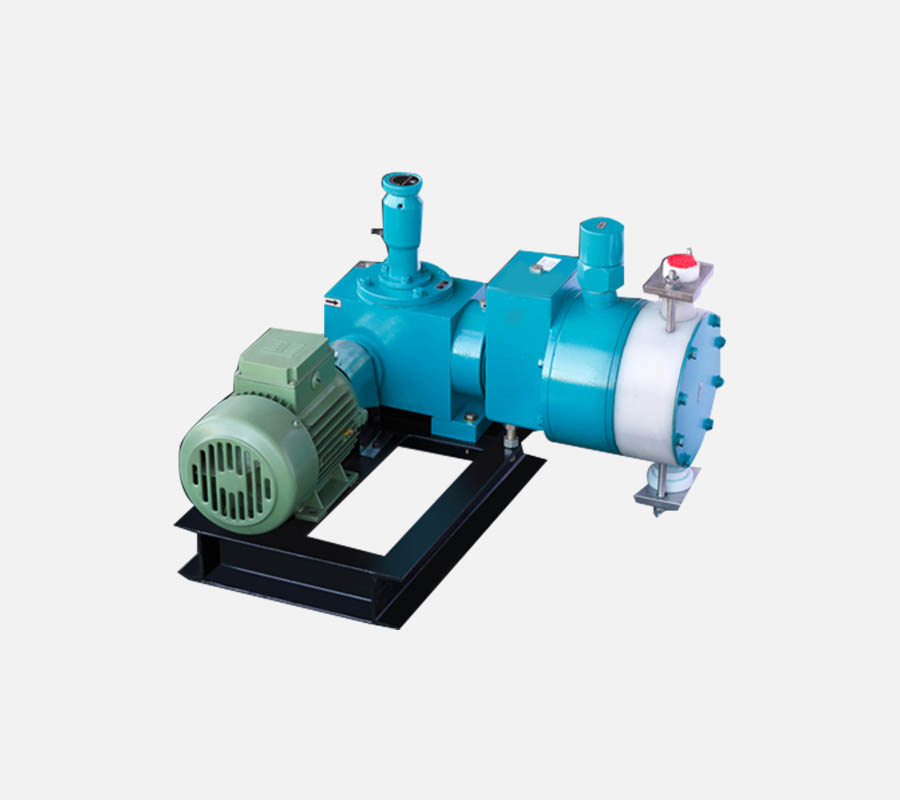
What Is a Hydraulically Actuated Diaphragm Pump?
A hydraulically actuated diaphragm pump is a positive-displacement metering pump that moves liquid through the controlled movement of a diaphragm. Unlike a mechanically actuated diaphragm pump, which transfers movement directly through its drive mechanism, a hydraulic diaphragm pump uses hydraulic fluid to transfer force to the diaphragm.
During the suction stroke, the diaphragm moves to draw process liquid into the pump head through the suction check valve. During the discharge stroke, the diaphragm displaces the liquid through the discharge check valve and into the process pipeline.
The diaphragm separates the pumped chemical from the hydraulic operating mechanism. This arrangement is useful for industrial applications where chemical containment, controlled dosing, and operation under demanding pressure conditions are important.
Selecting the right pump requires more than checking its maximum capacity. Buyers should also consider the actual operating flow, discharge pressure, liquid properties, temperature, and required control arrangement.
Key Features of Dosimix Hydraulically Actuated Diaphragm Pumps
Hydraulic Diaphragm Actuation
Hydraulic actuation transfers force through hydraulic fluid to move the diaphragm. This design separates the process liquid from the drive mechanism and supports controlled liquid metering in suitable industrial applications.
Adjustable Dosing Capacity
The published design provides a 0–100% stroke adjustment range. This allows the delivery rate to be adjusted according to process requirements, subject to the selected pump’s operating conditions.
Manual adjustment is available, while an electric actuator or control drive can be considered as an optional arrangement where required.
Hydraulic Relief and Bleed Arrangement
The pump incorporates hydraulic relief and bleed functions as described in the product information. These functions support the hydraulic operating system and its protection when correctly configured and maintained.
Multiple Flow and Pressure Options
The DMH series includes different models with published flow capacities ranging from 180 LPH to 9,900 LPH and maximum pressure ratings ranging from 80 kg/cm² to 405 kg/cm². Actual performance depends on the selected model and operating point.
Material Selection Options
Different liquid-end material options are listed for the pump range, including polypropylene, PVDF, PTFE, stainless steel, Alloy 20, and Hastelloy C options, subject to model and component availability.
Material selection should be based on the chemical composition, concentration, operating temperature, and compatibility requirements of the application.
Multiple Pump Configurations
Simplex, duplex, triplex, and quadriplex configurations are listed in the product information. The appropriate arrangement depends on the required pumping capacity, number of process streams, and overall system design.
DMH Hydraulically Actuated Diaphragm Pump Models
Dosimix offers different DMH models to address varying flow and pressure requirements. The following table presents the published model ranges for preliminary selection.
| Sr. No. | Pump Model | Capacity Max (LPH) | Pressure Max (Kg/cm2) |
| 1 | DMH 1000 | 0 TO 180 | 80 |
| 2 | DMH 2000 | 0 TO 812 | 120 |
| 3 | DMH 3000 | 0 TO 3460 | 340 |
| 4 | DMH 4000 | 0 TO 9900 | 405 |
Dosimix offers different DMH models to address varying flow and pressure requirements. The following table presents the published model ranges for preliminary selecti
LPH means litres per hour. These figures represent the published model ranges and maximum pressure ratings. They do not establish that maximum flow and maximum pressure are available simultaneously.
Selecting the Right Pump Model
DMH 1000: Consider this model for applications requiring a flow rate within its published capacity and a discharge pressure within its rated limit.
DMH 2000: Evaluate this model when the required dosing capacity exceeds the suitable range of a smaller model and the operating pressure remains within the applicable rating.
DMH 3000: Consider this model for higher-capacity industrial metering applications where its flow and pressure ratings meet the process requirements.
DMH 4000: Evaluate this model for applications requiring higher published flow capacity or pressure ratings up to 405 kg/cm², subject to confirmation of the actual operating point.
The final selection should be based on normal and maximum flow, operating pressure, chemical compatibility, temperature, suction conditions, and the required control arrangement.
Material Options for Industrial Chemical Dosing
Material compatibility is an important consideration when purchasing an industrial chemical dosing pump. An unsuitable wetted material can lead to corrosion, component degradation, contamination, or premature maintenance requirements.
Dosimix lists the following material options for its hydraulically actuated diaphragm pump range.
Component | Published Material Options |
Reagent head | PTFE, PP, PVDF, AISI 304, AISI 316, AISI 316L, Alloy 20, Hastelloy C |
Check valves | PTFE, PP, PVDF, AISI 304, AISI 316, AISI 316L, Alloy 20, Hastelloy C |
Diaphragm | PTFE, SS304, SS316 |
Gearbox | Cast iron |
The available materials may vary by model and component. Buyers should confirm the actual construction offered for the selected pump.
Industrial Applications of Hydraulically Actuated Diaphragm Pumps
Hydraulically actuated diaphragm pumps are used for selected industrial metering and chemical injection duties where the required flow, pressure, and chemical compatibility match the pump’s capabilities.
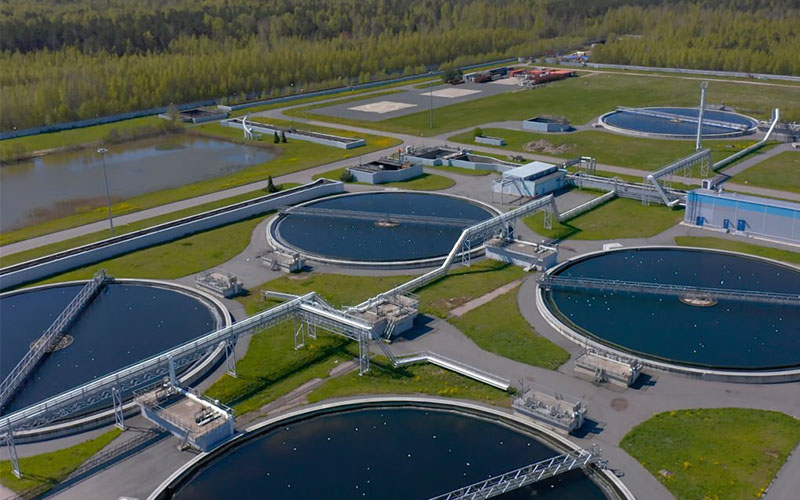
Waste Water Sector

Power Sector
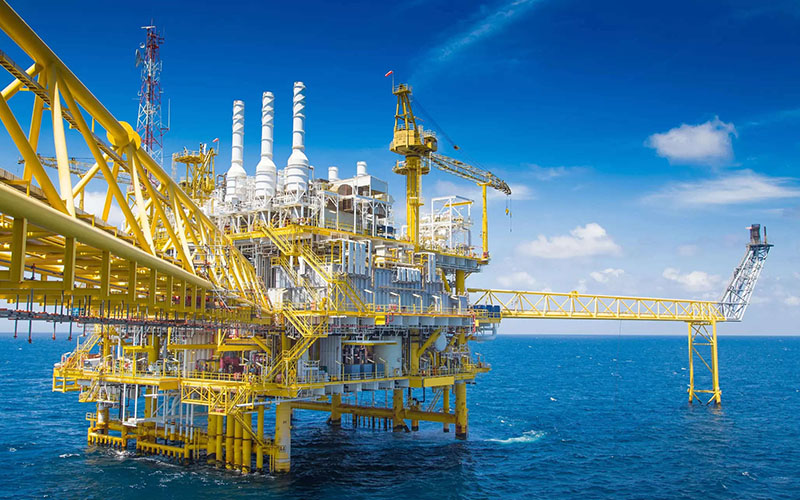
Oil & Gas Sector

Petrochemical Processing

Pharma Sector
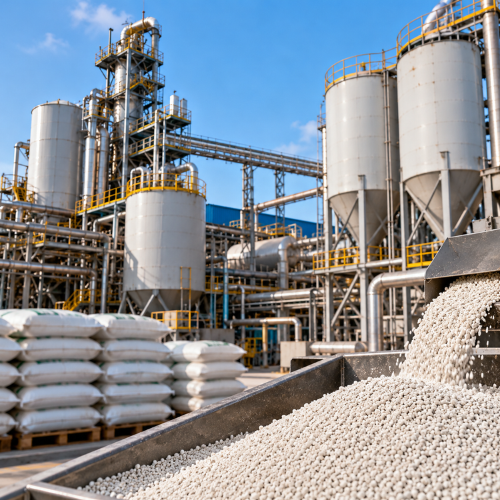
Fertilizer Manufacturing
Hydraulically Actuated vs. Mechanically Actuated Diaphragm Pumps
Both pump types use a diaphragm to move process liquid, but they differ in how the diaphragm receives its driving force.
Comparison Factor | Hydraulically Actuated Diaphragm Pump | Mechanically Actuated Diaphragm Pump |
Actuation method | Hydraulic fluid transfers force to the diaphragm | The drive mechanism acts directly on the diaphragm |
Selection focus | Applications requiring the capabilities of a hydraulic design | General dosing applications suited to the selected model |
Pressure requirements | Evaluate the applicable DMH model rating | Confirm the pressure rating of the specific mechanical pump |
Process-liquid separation | Diaphragm separates the process liquid from the drive mechanism | Diaphragm also separates the process liquid from the drive mechanism |
Key selection factors | Flow, pressure, fluid compatibility, diaphragm design, and controls | Flow, pressure, fluid compatibility, stroke adjustment, and duty |
A mechanically actuated diaphragm pump may be suitable for many general dosing applications. A hydraulically actuated design should be evaluated when its operating characteristics and available model ratings better match the process requirements.
The decision should be based on the required operating point and the manufacturer’s documented capabilities rather than assuming that either pump type is universally superior.
Operator Maintenance & Troubleshooting Guide
To maximize uptime and maintain operational accuracy, field engineers and maintenance teams can reference this practical troubleshooting guide:
Problem / Symptom | Probable Cause | Corrective Action |
Pump runs but provides no chemical discharge flow | Air trapped in hydraulic fluid chamber or suction piping. | Open internal air bleed valve to purge air; prime suction line. |
Foreign particles caught in check valve seats. | Dismantle valve assemblies, clean seats, and inspect ball valves for scoring. | |
Suction line blocked or suction valve closed. | Verify suction line isolation valves are open; clean suction strainer. | |
Pump dosing rate lower than calibrated output | Incorrect hydraulic oil level or worn plunger packing. | Top off hydraulic oil chamber; inspect internal plunger packing seals. |
Internal hydraulic relief valve set too low or leaking. | Readjust relief valve cracking pressure to design specification. | |
System backpressure higher than design capability. | Check discharge line for blockages or stuck backpressure valves. | |
Noisy operation or pipe vibration | Cavitation due to insufficient NPSHa or high liquid vapor pressure. | Increase suction tank fluid head or enlarge suction piping diameter. |
Hydraulic pulsation in long discharge line runs. | Install or recharge bladder-type pulsation dampeners. | |
Diaphragm rupture alarm triggered | Primary diaphragm material fatigue or chemical degradation. | Inspect wetted diaphragm; replace damaged double diaphragm kit and verify chemical compatibility. |
How to Select the Right Hydraulic Diaphragm Metering Pump
Before selecting a hydraulically actuated diaphragm pump, industrial buyers should establish the actual process requirements.
Required flow rate: Identify the normal and maximum dosing rates. The pump’s rated capacity should be appropriate for the intended operating range.
Discharge pressure: Establish the pressure required at the injection point, accounting for the system’s operating conditions. Do not select a model solely because its maximum pressure rating appears sufficient.
Chemical properties: Provide the chemical name, concentration, density, viscosity, and operating temperature where available.
Wetted materials: Confirm the suitability of the reagent head, check valves, diaphragm, and other wetted components.
Control requirements: Determine whether manual adjustment is sufficient or whether an optional actuator or external control arrangement is required.
Operating duty: Identify whether the pump will operate continuously or intermittently and provide any relevant installation constraints.
System accessories: Establish whether instrumentation, pressure protection, pulsation control, tank-level monitoring, or other accessories are needed.
Providing this information at the enquiry stage helps the supplier assess the appropriate model and configuration more efficiently.
Why Choose Dosimix Technologies for Industrial Dosing Requirements?
Dosimix Technologies is based in Ahmedabad, Gujarat, India, and supplies industrial dosing pumps, metering pumps, dosing systems, and related fluid-handling equipment.
The hydraulically actuated diaphragm pump range offers different model capacities, pressure ratings, material options, and configuration choices for industrial applications. The right selection depends on the actual process conditions and the pump’s documented capabilities.
When discussing your application with Dosimix, you can review:
- Suitable DMH models based on required flow and pressure.
- Chemical compatibility and wetted material options.
- Diaphragm construction and operating requirements.
- Manual or optional automatic stroke adjustment.
- Simplex or multiplex configuration requirements.
- Optional valves, instruments, and control arrangements.
For projects in India and export markets such as Saudi Arabia, the required operating conditions, applicable project standards, and scope of supply should be confirmed before ordering.
Request a Hydraulically Actuated Diaphragm Pump Quote
Are you sourcing a hydraulic diaphragm metering pump for chemical processing, oil and gas, fertilizer production, power generation, or water treatment?
Share your required flow rate, discharge pressure, chemical details, operating temperature, and installation requirements with Dosimix Technologies. This information will help establish whether a DMH model and its available configuration are suitable for your application.
Request a Pump Quote and discuss your industrial dosing requirements with Dosimix Technologies.
If You Have Any Enquiry
FAQs
A hydraulically actuated diaphragm pump is a positive displacement metering pump that uses hydraulic fluid to transfer force to a diaphragm. It is designed for controlled liquid dosing in industrial applications where chemical containment, flow control, and pressure requirements are important.
A hydraulically actuated diaphragm pump works by moving a diaphragm through hydraulic force. During the suction stroke, liquid enters the pump head through the suction check valve. During the discharge stroke, the diaphragm pushes the liquid through the discharge check valve into the process pipeline.
These pumps are used in oil and gas, chemical and petrochemical processing, fertilizer manufacturing, power generation, water and wastewater treatment, and other process industries. The correct pump depends on the required flow rate, operating pressure, and chemical compatibility.
A hydraulically actuated diaphragm pump transfers force through hydraulic fluid, while a mechanically actuated diaphragm pump uses its drive mechanism to move the diaphragm directly. The appropriate option depends on the application’s pressure requirements, dosing capacity, chemical properties, and operating conditions.
Dosimix Technologies offers the DMH 1000, DMH 2000, DMH 3000, and DMH 4000 hydraulically actuated diaphragm pump models. Their published flow capacities range from 0–180 LPH to 0–9,900 LPH, with maximum pressure ratings varying by model. The correct model should be selected according to the actual operating conditions.
Published material options include PTFE, polypropylene (PP), PVDF, AISI 304, AISI 316, AISI 316L, Alloy 20, and Hastelloy C for applicable components. Diaphragm options include PTFE, SS304, and SS316. Availability depends on the selected model and component.
Yes, they can be suitable for corrosive chemical dosing when the pump’s wetted materials are compatible with the chemical. Before selecting a pump, confirm the chemical name, concentration, operating temperature, and compatibility of the diaphragm, pump head, and check valves with the manufacturer.
To select the right hydraulic diaphragm metering pump, determine the required flow rate, discharge pressure, chemical properties, operating temperature, suction conditions, and control requirements. You should also confirm the wetted materials and whether the application needs manual or optional automatic stroke adjustment.
Yes, the Dosimix DMH pump range provides a published 0–100% stroke adjustment range. The dosing capacity can be adjusted according to process requirements, subject to the selected model’s operating conditions and the available adjustment arrangement.
Low flow may result from air in the suction line or hydraulic chamber, blocked suction piping, contaminated check valves, incorrect hydraulic oil level, hydraulic relief valve problems, or excessive system backpressure. Troubleshooting should follow the manufacturer’s instructions and the specific pump configuration.
These pumps can be used in continuous industrial metering applications when correctly selected, installed, and maintained. Suitability depends on the required operating conditions, chemical compatibility, pressure and flow requirements, and the manufacturer’s documented capabilities for the selected model.
To request a quote from Dosimix Technologies, share your required flow rate, discharge pressure, chemical name and concentration, operating temperature, and installation requirements. Dosimix Technologies, based in Ahmedabad, Gujarat, India, can assess the suitable DMH model and available configuration for your application.