

Dosing Pump Pressure Calculation Guide for Industrial Applications
Selecting the right dosing pump for your industrial facility is one of the most critical decisions you will make for your plant’s operational success. Whether you are managing a wastewater treatment plant, a chemical manufacturing unit, a pharmaceutical facility, or a food processing operation, accurate chemical dosing ensures product quality, equipment safety, and regulatory compliance.
However, many procurement officers and plant managers encounter a major problem: How do you calculate the required pressure for a dosing pump without getting lost in complicated engineering formulas?
If you select a pump with insufficient pressure, your chemicals will not reach their destination. If you choose a pump with excessively high pressure without proper controls, you risk line bursts, equipment damage, and wasted budget.
In this comprehensive guide, we break down dosing pump pressure calculation into simple, easy-to-understand steps. You will also discover why partnering with a trusted dosing pump manufacturer in India, such as Dosimix Technologies, ensures you get the exact pumping system your plant needs.
Why Pressure Calculation is Critical for Industrial Dosing Pumps
A dosing pump (also known as a chemical metering pump) is designed to inject a precise quantity of chemical or liquid into a process pipeline or tank under specific pressure conditions.
Unlike standard transfer pumps that focus primarily on high flow volume, a dosing pump focuses on extreme accuracy, repeatable volume control, and continuous pressure management.
What Happens When You Miscalculate Pump Pressure?
- Under-Sized Pressure Rating: The backpressure from your process line will overcome the pump. Chemical dosing will stop entirely, leading to process contamination, improper treatment, or factory downtime.
- Over-Sized Pressure Rating: Purchasing an unnecessarily large pump increases your initial capital investment, consumes more power, and accelerates wear on system pipework.
- Inaccurate Chemical Injection: Variations in pressure cause flow fluctuations, leading to over-dosing (wasting expensive chemicals) or under-dosing (failing quality checks).
By calculating your system pressure accurately before buying, you ensure continuous operation, lower electricity bills, and longer equipment life.
Key Factors That Determine Dosing Pump Pressure
Before diving into the simple calculation formula, let us understand the four basic components that create pressure in an industrial dosing system:
Total Required Pump Pressure = Static Head + Friction Loss + Vessel/Process Pressure + Safety Margin
Let us look at each component in plain, simple language:
1. Static Lift / Discharge Head (Vertical Height)
This is the physical vertical height (in meters) that the liquid must travel from the dosing pump outlet to the final injection point. Gravity creates resistance against the flow.
2. Vessel or System Operating Pressure
If your pump is injecting chemicals into a pressurized tank, boiler, or pipeline, the pump must produce higher pressure than the internal pressure of that vessel to force the liquid inside.
3. Friction Losses in Pipework
As liquid travels through pipes, valves, elbows, strainers, and backpressure valves, friction slows it down. Viscous chemicals (like polymers or heavy acids) create higher friction than water.
4. Safety Margin
Industrial operating conditions fluctuate. Power variations, temperature changes, or slight chemical build-up inside pipes can alter resistance over time. Adding a standard safety buffer (usually 10% to 20%) guarantees consistent performance.
Step-by-Step Dosing Pump Pressure Calculation Guide
Selecting the correct dosing pump pressure rating starts with understanding the actual pressure your chemical dosing system needs to overcome. A simple calculation of static head, process pressure, and line resistance can help you determine the required working pressure before approaching a dosing pump manufacturer in India.
Follow these four steps to estimate the required dosing pump pressure.
Step 1: Calculate the Static Discharge Head
chemical injection point. This height creates hydrostatic pressure that the pump must overcome.
Basic calculation:
10 metres of vertical water head ≈ 1.0 bar ≈ 14.5 PSI
For example, if the chemical injection point is 15 metres above the dosing pump, the static pressure will be:
Static Pressure = 15 ÷ 10 = 1.5 bar
Therefore, the pump needs to overcome approximately 1.5 bar due to the vertical discharge height.
Step 2: Determine the System or Vessel Pressure
Next, check the operating pressure at the point where the chemical is being injected. This could be a process pipeline, reactor, tank, boiler system, or other pressurised equipment.
For example, if the process pipeline operates at 4.0 bar, the dosing pump must be capable of delivering the chemical against this pressure.
System Pressure = 4.0 bar
This value is particularly important because the dosing pump must generate sufficient discharge pressure to overcome the existing process pressure at the injection point.
Step 3: Estimate Pipe Friction and Line Resistance
Chemical dosing lines create additional resistance because of pipe length, valves, elbows, fittings, injection assemblies, and other components.
For a standard dosing installation with moderate pipe lengths and water-like liquids, you can use an initial allowance of approximately:
- 5–1.0 bar for normal pipe friction and fittings
- 5–2.0 bar or more may be required when handling highly viscous chemicals or fluids with greater flow resistance
For our example, assume the estimated friction and line resistance is 0.5 bar.
Friction Loss = 0.5 bar
For an actual system, the pressure loss should ideally be calculated from the piping arrangement, fluid properties, flow rate, pipe size, fittings, and other relevant system conditions rather than relying only on a general allowance.
Step 4: Add the Pressure Components and Apply a Safety Margin
Once the individual pressure values are identified, add them together to estimate the required working pressure.
Working Pressure = Static Pressure + System Pressure + Friction Loss
Using the example values:
Working Pressure = 1.5 + 4.0 + 0.5
Working Pressure = 6.0 bar
It is also good practice to account for unexpected operating variations or temporary pressure increases. Applying a 15% safety margin gives:
Required Pressure = 6.0 × 1.15
Required Pressure = 6.9 bar
Final Selection
Based on this example, a dosing pump with a working pressure rating of at least 7.0 bar would provide a reasonable pressure margin for the calculated operating requirement.
However, pressure rating should not be selected in isolation. The final dosing pump should also be matched to the required flow rate, chemical characteristics, injection conditions, piping configuration, and overall process requirements.
A proper pressure calculation helps avoid selecting an undersized pump that cannot achieve the required chemical flow and also prevents unnecessary oversizing. For critical applications, the final selection should be verified with the dosing pump manufacturer based on the complete process data.
Pressure Calculation Quick-Reference Table
Application Type | Typical Line Pressure | Recommended Safety Margin | Suggested Pump Rating |
Open-Tank Water Treatment | 1.0–3.0 bar | 15% | 3.0–5.0 bar |
Boiler Chemical Feed | 10.0–25.0 bar | 20% | 15.0–30.0 bar |
High-Pressure Petrochemical Line | 30.0–70. bar | 20% | 40.0–85.0 bar |
Pharmaceutical & Food Processing | 2.0–6.0 bar | 15% | 5.0–8.0 bar |
Selecting the Right Pump Technology for High-Pressure Applications
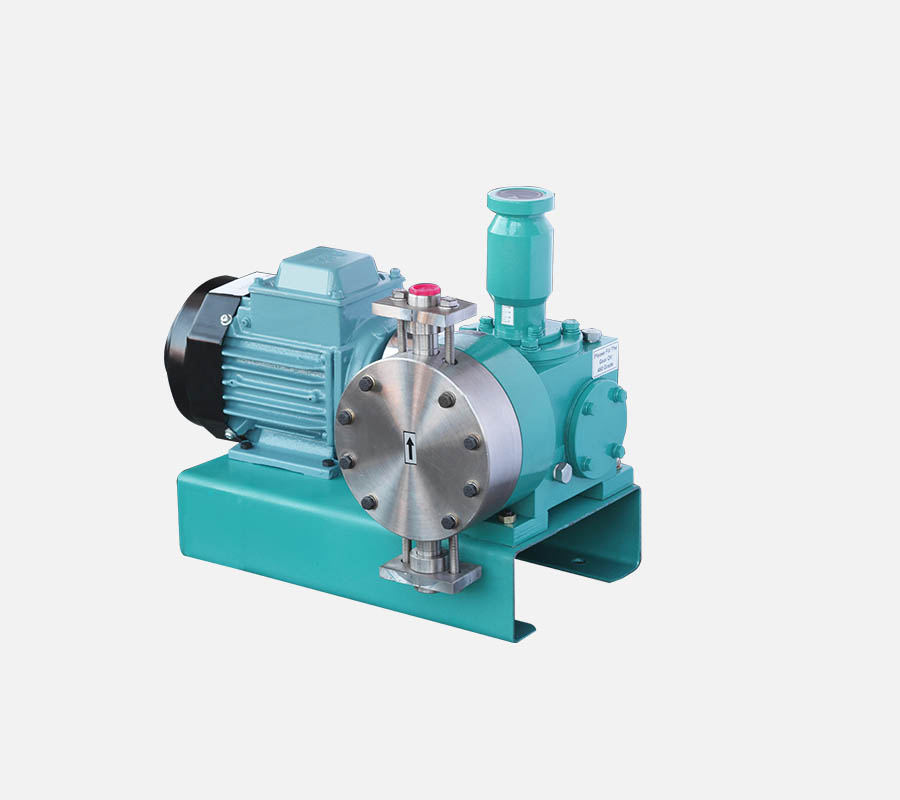
Once you know your required pressure, selecting the right pump mechanism is key. For demanding industrial applications requiring high accuracy and zero chemical leakage under pressure, the Hydraulically Actuated Diaphragm Pump is the industry standard.
Why Choose a Hydraulically Actuated Diaphragm Pump?
- Leak-Free Operation: Complete hydraulic isolation ensures hazardous chemicals cannot leak out.
- Extreme Pressure Capabilities: Easily handles high-pressure environments (up to 100+ bar) without diaphragm distortion.
- Long Service Life: The diaphragm is balanced equally between hydraulic fluid and process fluid, eliminating localized stress and extending working life.
- High Repeatability: Delivers consistent metering accuracy within ±1% , even during pressure variations.
When working with heavy chemicals, toxic liquids, or high-pressure boilers, choosing a Hydraulically Actuated Diaphragm Pump manufactured by Dosimix Technologies guarantees safe, continuous, and efficient chemical dosing.
Common Mistakes Industrial Buyers Should Avoid
When industrial plant owners and purchase managers buy a dosing pump, simple oversight can lead to operational failures. Here are key mistakes you should avoid:
- Ignoring Backpressure Valves: If injecting into an open tank or low-pressure line, gravity or line vacuum can cause siphoning. Always install a quality backpressure valve supplied by Dosimix Technologies.
- Confusing Flow Rate with Pressure: A pump rated for 100 Liters Per Hour (LPH) at 3 bar will not deliver 100 LPH if your system pressure rises to 8 bar. Always check the flow-versus-pressure curve.
- Overlooking Chemical Compatibility: High pressure increases chemical reactivity. Ensure pump heads, diaphragms, and seals match the exact corrosive profile of your chemical.
- Buying Low-Quality, Unbranded Pumps: Cheap local pumps lack proper pressure relief mechanisms and suffer frequent diaphragm failures, halting production.
Why Dosimix Technologies is the Best Industrial Dosing Pump Manufacturer in India
Selecting the correct pressure rating is only half the battle—the other half is choosing a reliable manufacturer who delivers performance, durability, and expert after-sales support.
Dosimix Technologies has established itself as the premier Dosing Pump Manufacturer in India, serving water treatment, oil & gas, pharmaceuticals, textiles, power plants, and chemical industries nationwide.
What Makes Dosimix Technologies the Preferred Industry Choice?
- Customized Engineering Solutions: Dosimix Technologies custom designs chemical dosing systems and Hydraulically Actuated Diaphragm Pumps based on your specific plant pressure, flow, and liquid viscosity.
- Uncompromised Quality & Testing: Every dosing pump built by Dosimix Technologies undergoes rigorous pressure hydrostatic testing and performance calibration before shipment.
- Wide Pressure & Capacity Range: From low-pressure water treatment to extreme high-pressure industrial applications, Dosimix Technologies provides complete end-to-end solutions.
- Prompt Technical Support: Plant managers trust Dosimix Technologies for rapid delivery, ready availability of original spare parts, and dedicated expert assistance across India.
How to Get Started with Your Dosing Pump Selection
Calculating pump pressure does not need to be complicated. By following this basic formula—Static Height + Line Pressure + Friction Loss + Safety Buffer—you can clearly communicate your requirements to equipment suppliers.
If you want absolute peace of mind and precision engineered equipment for your facility, let the experts at Dosimix Technologies assist you.
Take the Next Step for Your Industrial Plant:
- Note down your desired chemical flow rate (Liters per hour).
- Measure your vertical discharge height and process pipe pressure.
- Contact Dosimix Technologies—the best Dosing Pump Manufacturer in India—for a tailored quotation and technical selection support.
Partner with Dosimix Technologies today to ensure maximum reliability, accurate chemical dosing, and unmatched operational safety for your business.
FAQs
The required dosing pump pressure can be estimated by adding static head, system or vessel pressure, friction loss, and a suitable safety margin. The basic formula is: Required Pressure = (Static Head + System Pressure + Friction Loss) × Safety Margin.
The basic formula is: Working Pressure = Static Pressure + System Pressure + Friction Loss. After calculating the working pressure, a safety margin can be added to account for pressure fluctuations and changing operating conditions.
Approximately 10 metres of vertical water head equals 1.0 bar or 14.5 PSI. Therefore, a 20-metre vertical discharge height would create approximately 2.0 bar of static pressure for water-like conditions.
Accurate pressure calculation helps ensure that the dosing pump can overcome process pressure, vertical head, and pipe resistance. An undersized pump may fail to deliver the required chemical flow, while unnecessary oversizing can increase cost, energy consumption, and equipment stress.
The dosing pump must generate sufficient discharge pressure to overcome the pressure at the chemical injection point. For example, if a process pipeline operates at 4 bar, the pump must be capable of dosing against that pressure in addition to static head and friction losses.
The article recommends allowing approximately 10% to 20% as a safety margin for normal industrial variations. In the worked example, a 15% safety margin is applied to a calculated working pressure of 6.0 bar, resulting in approximately 6.9 bar required pressure.
Friction loss is caused by resistance from pipes, valves, elbows, fittings, strainers, backpressure valves, and injection assemblies. Higher-viscosity chemicals can create greater resistance and may require a more detailed pressure-loss calculation.
Not necessarily. A dosing pump’s actual flow performance can change as discharge pressure increases. For example, a pump rated for 100 LPH at 3 bar should not automatically be assumed to deliver 100 LPH at 8 bar. The manufacturer’s flow-versus-pressure performance should be checked.
For demanding high-pressure applications, a Hydraulically Actuated Diaphragm Pump can be suitable because it provides controlled chemical metering and hydraulic isolation of the process liquid. The final pump selection should consider pressure, flow rate, chemical properties, and injection conditions.
Start by determining the required flow rate, static discharge head, process pressure, friction losses, chemical characteristics, and safety margin. These parameters should then be reviewed with a reliable Dosing Pump Manufacturer in India, such as Dosimix Technologies, to select the appropriate pump and dosing system.