

How to Ensure Safe Drinking Water? The Ultimate Guide to Precise Chlorine Dosing Systems
Clean and safe water is a basic need for everyone. Whether it is for a large factory, a residential society, a commercial building, or a municipal water project, providing safe drinking water is a top priority. Water from rivers, borewells, or municipal pipelines often contains harmful germs, bacteria, and viruses. If this water is consumed without proper treatment, it can cause severe health problems and waterborne diseases.
To make water 100% safe for consumption, water treatment experts rely on a proven process called chlorination. However, simply adding chlorine to water is not enough. You need the exact right amount. Adding too little chlorine leaves harmful bacteria alive, while adding too much chlorine creates a bad chemical smell, unpleasant taste, and health hazards.
This is where a precise Chlorine Dosing Systems plays a life-saving role.
In this comprehensive guide, we will explain how accurate water dosing works, why industrial buyers choose automated solutions, and how Dosimix Technologies, the leading Dosing System Manufacturer, helps businesses achieve crystal-clear, 100% safe water effortlessly.
The Common Challenges Industrial Water Buyers Face
If you manage a factory, a hotel, a food processing plant, a housing society, or a commercial complex, managing water safety can be a daily headache. Many plant managers and facility owners face similar struggles when handling water treatment manually:
1. Inconsistent Water Quality
When workers manually pour chlorine liquid or powder into water tanks, the dosage is never consistent. Some days the chlorine levels are too high, and other days they are too low. This inconsistency puts human lives and product quality at risk.
2. High Chemical Wastage and Extra Costs
Manual dosing often leads to chemical spills and over-dosing. Chemical raw materials are expensive. Wasting chlorine day after day increases operational costs significantly.
3. Equipment Damage and Corrosion
Excessive chlorine build-up in pipelines causes rust, corrosion, and damage to expensive industrial pumps, cooling towers, and storage tanks. This leads to costly repairs and sudden downtime.
4. Health Risks for Workers
Handling toxic chemicals manually exposes site workers to dangerous fumes, skin burns, and chemical splashes. Safety should always come first in any industrial unit.
5. Regulatory Compliance Issues
Government health departments and environmental safety boards mandate strict water quality standards. Failing to maintain accurate chlorine levels can lead to heavy fines or plant shutdown notices.
To solve all these operational problems in one go, modern facilities are shifting away from manual methods and switching to an automated Chlorine Dosing Systems for Water Treatment built by Dosimix Technologies.
What is a Chlorine Dosing System and How Does It Work?
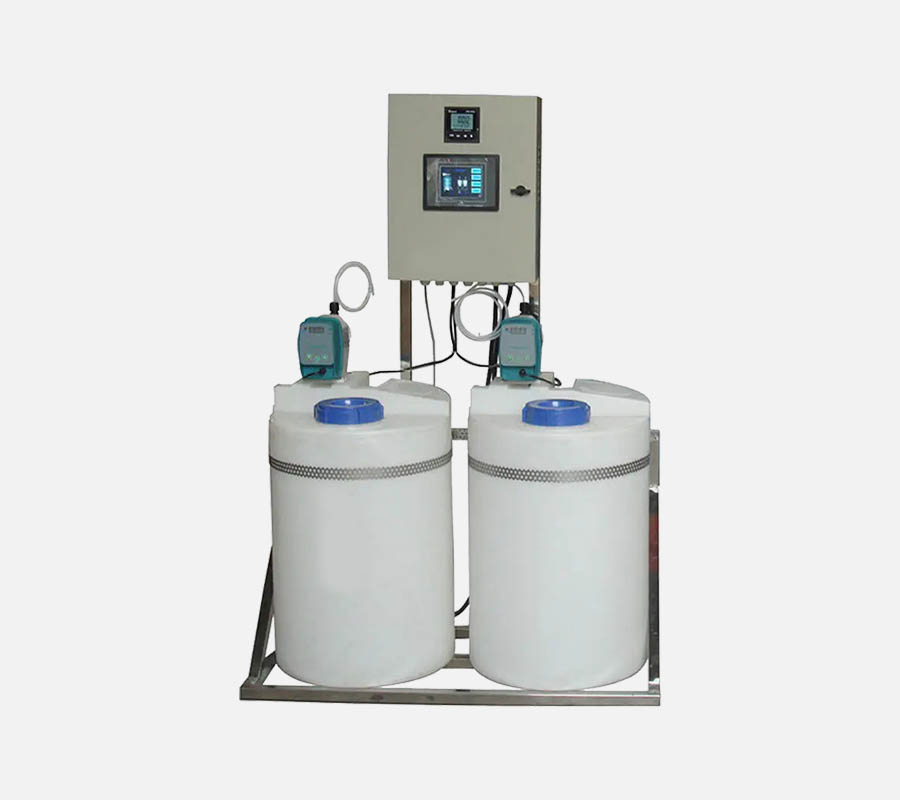
A Chlorine Dosing Systems is an automated setup designed to feed an exact quantity of chlorine liquid into a flowing stream or storage tank of water.
Instead of guessing chemical quantities, the system automatically measures the water flow and injects the exact micro-dose of chlorine needed to kill bacteria, germs, and algae completely.
Simple Step-by-Step Working Mechanism:
- Water Entry: Raw water enters the main treatment line or underground storage tank.
- Signal & Sensing: The system checks the water volume or chemical requirement.
- Controlled Pumping: The heavy-duty dosing pump from Dosimix Technologies draws liquid sodium hypochlorite or chlorine solution from a dedicated chemical tank.
- Precise Injection: The pump injects tiny, controlled droplets of chlorine into the water pipe through a non-return injection valve.
- Thorough Disinfection: The chlorine mixes uniformly with water, destroying harmful micro-organisms without leaving unwanted chemical smells or tastes.
By using a reliable water dosing system, you automate your entire disinfection process, saving time, chemical costs, and human effort.
Why Precise Chlorine Dosing Matters for Safe Drinking Water
Water treatment is all about balance. Precision is the key difference between safe drinking water and contaminated chemical water. Here is why accurate dosing matters so much:
Complete Germ Destruction
Bacteria like E. coli, cholera, and typhoid grow rapidly in raw water. Accurate chlorine dosing destroys these pathogen cell walls within seconds, rendering the water completely safe for drinking, washing, and manufacturing processes.
Residual Protection
One major advantage of chlorine over other water treatment methods (like UV rays or Ozonation) is residual protection. When a Dosimix Technologies system treats water, a small, safe residual amount of chlorine stays in the water as it travels through long pipeline networks. This prevents fresh bacteria from growing inside dark pipelines and storage tanks.
Eliminates Odor and Bad Taste
Nobody likes drinking water that smells heavily like bleach. Precise dosing ensures that chlorine breaks down contaminants completely without leaving excess chemical residue that alters the natural taste and smell of clean water.
Protects Downstream Equipment
In manufacturing industries, water feeds into expensive boilers, chillers, reverse osmosis (RO) plants, and cooling towers. Balanced water prevents bio-fouling and keeps internal pipelines free from algae slime.
Major Applications of Chlorine Dosing Systems Across Industries
Every industry that handles water requires an efficient Chlorine Dosing Systems for Water Treatment. Let us look at how different sectors benefit:
1. Residential Complexes and Housing Societies
Gated communities, high-rise residential towers, and townships rely on borewell water or tanker water. Installing a Dosimix Technologies setup ensures that thousands of residents receive clean, pathogen-free water directly at their kitchen taps.
2. Food and Beverage Manufacturing
Food factories, dairy plants, juice units, and beverage manufacturers need water that meets strict international hygiene standards. Any water contamination can ruin entire production batches. A Dosimix Technologies dosing setup guarantees consistent purity for food processing and bottle washing.
3. Hotels, Resorts, and Commercial Buildings
Hotels, hospitals, shopping malls, and corporate parks require large volumes of clean water daily for drinking, cooking, swimming pools, and HVAC systems. Automated dosing units maintain water safety standards round the clock without requiring constant manual supervision.
4. Municipal Water Supply Plants
Cities and rural water supply schemes treat millions of liters of water daily. Industrial-grade solutions from Dosimix Technologies help municipal boards maintain accurate chemical feed rates across massive water distribution networks.
5. Textile and Chemical Processing Industries
Industrial processes require treated water to protect raw materials and dyes from biological contamination during manufacturing cycles.
Why Choose Dosimix Technologies as Your Trusted Dosing System Manufacturer?
When investing in industrial water treatment machinery, choosing the right manufacturer makes all the difference. Dosimix Technologies has earned a solid reputation as one of the Best Chlorine Dosing Systems Manufacturers in India.
Here is why industrial buyers, plant engineers, and project consultants prefer Dosimix Technologies:
1. Robust Engineering Built for Indian Conditions
Water quality across India varies greatly from state to state. Borewell water in Gujarat may be rich in minerals, while river water in Kerala has different organic properties. Dosimix Technologies designs industrial units specifically engineered to withstand harsh working environments, high ambient temperatures, and varying water quality conditions.
2. Exceptional Dosing Accuracy
Every Dosimix Technologies unit is crafted to deliver unmatched dosing accuracy. With fine adjustment features, operators can control chemical flow rates effortlessly, ensuring zero chemical wastage and 100% compliance with water safety standards.
3. Durable, Chemical-Resistant Materials
Chlorine is a strong chemical that quickly degrades low-quality plastics and metal parts. Dosimix Technologies manufactures systems using premium, corrosion-resistant raw materials like PVDF, PTFE, PVC, and high-grade stainless steel. This ensures your equipment lasts for years without leakages or mechanical failures.
4. Plug-and-Play Installation
Nobody wants complex machinery that takes weeks to set up. Equipment from Dosimix Technologies comes pre-tested, compact, and ready for fast, hassle-free installation. Your maintenance team can operate and manage the system with basic training.
5. Low Power and Low Maintenance Requirements
Energy consumption directly impacts running costs. Dosimix Technologies designs energy-efficient pump systems that consume minimal power while operating continuously. Furthermore, the robust build minimizes routine spare part replacements.
6. Outstanding Customer Support and Service
When you partner with Dosimix Technologies, you get reliable after-sales support, prompt spare parts delivery, and expert technical guidance whenever you need assistance.
Key Features to Look for in a Water Dosing System
When buying a water dosing system for your commercial or industrial setup, keep an eye out for these crucial features:
- Adjustable Stroke Length and Frequency: Allows operators to increase or decrease chemical dosing based on changing water flow rates.
- Leak-Proof Diaphragm Design: Ensures zero chemical leakage, protecting site operators and nearby equipment.
- Automatic Air Release Valve: Prevents airlocks inside chemical suction lines, maintaining smooth pump operation.
- Compact Footprint: Saves valuable floor space in small plant rooms and water treatment basements.
- Corrosion-Free Enclosure: Weatherproof casing that shields internal electrical circuits from moisture, dust, and acidic fumes.
Every setup built by Dosimix Technologies includes these essential engineering features to guarantee hassle-free performance.
Step-by-Step Guide: How to Select the Right Chlorine Dosing System for Your Plant
Selecting the right system does not have to be complicated. Just follow these simple steps before placing your order:
Step 1: Calculate Your Total Water Flow Rate
Determine how many liters or gallons of water your facility treats per hour or per day. For instance, a small commercial building might process 5,000 liters per hour, while a factory might process 50,000 liters per hour.
Step 2: Determine Your Water Source and Quality
Raw water from borewells, lakes, or rainwater tanks requires different chlorine dosage amounts compared to pre-filtered municipal water. Testing your raw water helps identify the exact chemical dosing requirement.
Step 3: Choose the Desired Chlorine Concentration
Decide whether you will use liquid sodium hypochlorite or dissolved chlorine granules in your chemical preparation tank.
Step 4: Consult the Experts at Dosimix Technologies
Instead of guessing, get in touch with the technical sales team at Dosimix Technologies. Their team analyzes your operational needs, water volume, and site conditions to recommend the perfect model at the best value.
Simple Maintenance Tips to Keep Your System Running Smoothly
To keep your Chlorine Dosing Systems working like new for years, follow these simple maintenance practices:
- Daily Visual Inspection: Check chemical tank liquid levels and inspect pipelines for any visible drips or chemical crystallization.
- Clean the Foot Valve & Injection Valve: Periodically rinse suction valves with clean water to prevent chemical buildup.
- Use Quality Chemicals: Always use clean, debris-free chlorine solutions to prevent pump clogging.
- Inspect Diaphragm and Seals: Check pump seals during routine scheduled maintenance and replace them if worn out.
- Keep the Area Clean: Maintain a dry, well-ventilated space around your dosing skid to prevent chemical fume buildup.
Because Dosimix Technologies uses superior components, routine maintenance is fast, clean, and minimal.
The Business Benefits of Switching to Automated Chlorine Dosing
Investing in a top-grade water dosing system from Dosimix Technologies yields immediate operational advantages:
- Lower Chemical Bills: Accurate chemical feed eliminates over-dosing and reduces monthly chemical expenditure.
- Reduced Labor Cost: Automated operation frees your maintenance staff to focus on other core tasks.
- Uninterrupted Operations: Durable equipment prevents unscheduled breakdowns and production downtime.
- Peace of Mind: Knowing your water supply is consistently safe shields your business from health compliance issues and brand reputation risks.
Upgrade Your Water Treatment with Dosimix Technologies
Ensuring safe, clean, and germ-free drinking water is not a luxury—it is an absolute necessity for every business, industry, and residential setup. Manual chemical dosing is unpredictable, unsafe, wasteful, and costly.
Upgrading to an automated Chlorine Dosing Systems solves all water treatment hassles in one easy step. By choosing Dosimix Technologies, recognized as one of the Best Chlorine Dosing Systems Manufacturers in India, you get unmatched dosing precision, exceptional build quality, long service life, and reliable expert support.
Take full control of your water purity today. Partner with Dosimix Technologies for advanced, reliable, and cost-effective Chlorine Dosing Systems for Water Treatment tailored to your exact operational requirements!
FAQs
A chlorine dosing system is used to add a controlled amount of chlorine to water for disinfection. It typically uses a dosing pump, a chemical storage tank, and an injection valve to deliver chlorine into a water line or tank. The correct dosage helps control harmful microorganisms and maintain water quality.
A chlorine dosing system helps disinfect drinking water by controlling the amount of chlorine added. Proper dosing helps reduce harmful bacteria and other microorganisms while maintaining an appropriate chlorine residual in the distribution network.
Automated chlorine dosing systems help maintain more consistent chemical feed rates, reduce manual handling, minimize chemical wastage, and lower the risk of over-dosing or under-dosing. Depending on the system design, dosing can be adjusted according to water flow or treatment requirements.
Chlorine dosing systems are used in municipal water treatment plants, residential societies, hotels, hospitals, food and beverage facilities, textile industries, chemical processing plants, and commercial buildings. They help these facilities manage water disinfection according to their specific treatment needs.
To select the right chlorine dosing system, evaluate the water flow rate, raw water quality, chlorine solution concentration, required dosing rate, operating conditions, and chemical compatibility. Consult a dosing system manufacturer such as Dosimix Technologies to identify a suitable configuration for your application.
Liquid sodium hypochlorite is commonly used in chlorine dosing systems. Other chlorine-based chemicals may also be suitable, depending on the treatment process and system design. The chemical concentration, compatibility, storage requirements, and safety procedures should be checked before selecting the dosing equipment.
Manual chlorine dosing can cause inconsistent chemical concentrations, chemical wastage, spills, and increased worker exposure to hazardous chemicals. It may also make it difficult to maintain stable disinfection levels. A properly selected automated dosing system can help improve dosing consistency and operational safety.
To prevent chlorine over-dosing and under-dosing, determine the water flow rate, test the incoming water quality, calibrate the dosing pump, and regularly measure chlorine residuals. Where appropriate, use flow-proportional or feedback-controlled dosing to adjust chemical feed according to changing treatment conditions.
Important features include adjustable dosing control, chemical-resistant wetted parts, a leak-resistant pump design, reliable injection valves, suitable safety provisions, and easy maintenance access. Automatic control and monitoring features may also be beneficial when water flow or chlorine demand varies.
Inspect the chemical tank, suction line, dosing pump, diaphragm, seals, and injection valve regularly. Clean components according to the manufacturer’s instructions, check for leaks or blockages, and verify pump calibration and chlorine residual levels. Always follow appropriate chemical-handling and maintenance safety procedures.
A chlorine dosing system can improve dosing consistency, reduce chemical wastage, limit manual handling, and support reliable disinfection. Automated systems can also reduce routine operator workload and help maintain water quality when properly selected, operated, and monitored.
You can contact Dosimix Technologies, an industrial dosing system manufacturer based in Ahmedabad, Gujarat, India, for chlorine dosing solutions for water treatment applications. Share your water flow rate, chemical concentration, application, and operating requirements to help the technical team recommend a suitable system.