

Why Is Your Metering Pump Flow Rate Unstable (and How to Fix It)?
Every factory owner, plant manager, and industrial buyer in India faces the same big challenge: How do we treat our wastewater easily, avoid government penalties, and keep our plants running smoothly without spending a fortune?
If you are looking for a reliable, hassle-free solution to clean your industrial waste water, you have probably come across the term Chemical Dosing System. But with so many options in the market, choosing the right one can become incredibly confusing.
Most manufacturers fill their websites with complex engineering terms, numbers, and technical jargon that make your buying decision harder.
At Dosimix Technologies, we believe buying industrial equipment should be simple. You do not need to be an engineer to choose the right system for your factory. You just need a system that works perfectly, saves you money, and keeps your plant compliant with the pollution control board.
In this guide, we will break down exactly how to choose the right Chemical Dosing System for Wastewater Treatment Plant without getting lost in technical confusion. We will also show you why partnering with the right Dosing System Manufacturer in India can save you years of operational stress.
What Does an Unstable Metering Pump Flow Rate Look Like?
Before diving into causes and solutions, it is important to recognize the signs of unstable dosing in your daily operations:
- Inconsistent Dosing Volume: The pump transfers 10 liters in one hour, but drops to 6 liters the next hour under the same settings.
- Air Bubbles in Discharge Line: You notice visible air gaps or uneven spurts of chemical liquid moving through the pipeline.
- Sputtering or Loud Vibrations: The motor is running, but the liquid moves in erratic bursts instead of steady, measured strokes.
- Over-Dosing or Under-Dosing: Your chemical test results show wildly inconsistent concentration levels in the final tank or water treatment process.
When any of these issues occur, your immediate reaction might be that the equipment is completely broken. However, most flow rate issues are easy to troubleshoot once you understand the root cause.
Common Reasons Why Your Metering Pump Flow Rate Is Unstable
Let us look at the most frequent real-world reasons why a metering pump loses its accuracy during operation:
1. Air Trapped in the Pump Head (Air Locks)
Air is the biggest enemy of accurate chemical liquid dosing. If air bubbles get trapped inside the pumping chamber, the pumpcompresses the air instead of pushing the liquid forward. Because air squeezes easily while liquids do not, the overall volume moved with each stroke drops significantly.
Common causes of trapped air:
- Loose suction line fittings letting outside air in.
- Running the chemical tank completely empty.
- Liquids that release gas naturally (such as sodium hypochlorite or hydrogen peroxide).
2. Clogged Suction Strainers and Check Valves
Chemicals often contain small particles, dirt, or crystallized residue. Over time, these small solids settle in the suction filter or block the ball check valves inside the pump head.
If the suction valve does not seat properly or if the strainer is choked, the pump cannot pull the required amount of liquid from the storage tank. This directly leads to sudden drops in flow volume.
3. Incorrect Suction Line Setup
Many factory line setups in India suffer from improper piping layout. If your suction pipe is too long, too narrow, or has too many sharp 90-degree elbows, it creates high resistance. The metering pump has to work much harder to pull the chemical, causing cavitation (formation and collapse of vapor bubbles) and erratic flow.
4. Fluctuating Back Pressure
A chemical dosing system relies on consistent pressure in the discharge pipe to control liquid movement. If the pressure in your discharge pipeline jumps up and down because of main line valve changes or booster pump activity, your output flow will constantly shift. Without a dedicated back-pressure valve, liquid might even siphon freely through the pump when pipeline pressure drops too low.
5. Damaged Diaphragms or Worn Seals
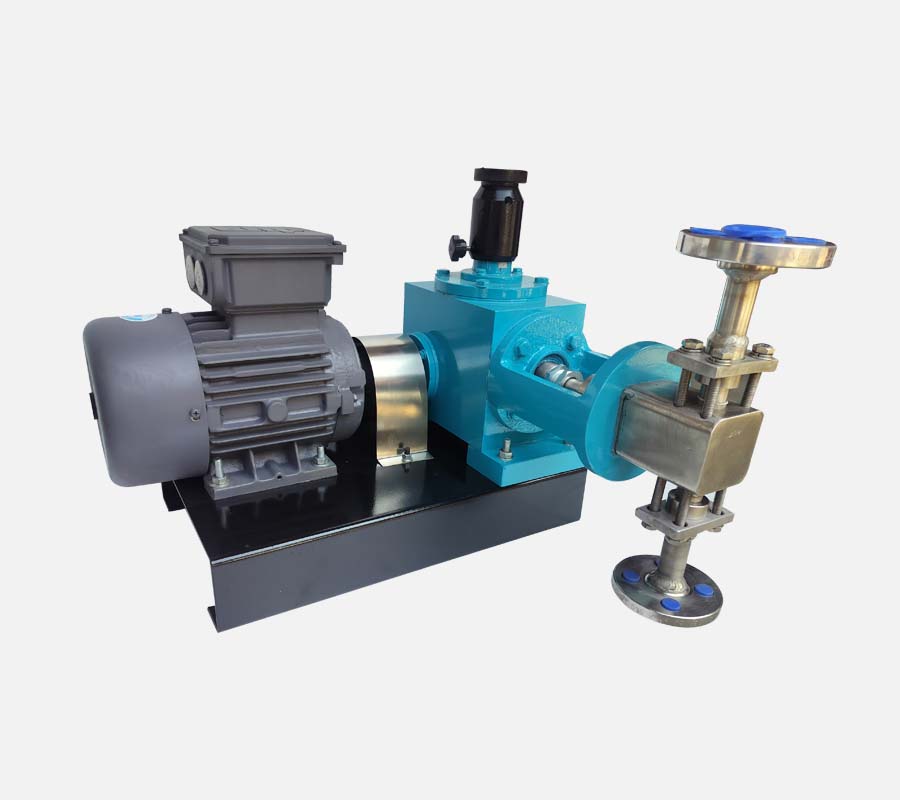
Inside every mechanical or hydraulic dosing setup, flexible diaphragms and rubber O-rings do the heavy lifting. Over months of continuous operation with aggressive acids, alkalis, or solvents, these seals gradually wear out, stretch, or crack. A worn diaphragm cannot create a full vacuum stroke, leading to lost pumping capacity.
6. Liquid Viscosity and Temperature Changes
If you dose thick liquids, polymers, or chemicals that thicken when ambient factory temperatures drop during nighttime shifts, the flow behavior changes. Thicker liquids move slower through narrow suction tubes, reducing the actual volume pumped per minute compared to thin water-like liquids.
The Hidden Financial Impact Competitors Don’t Tell You About
Many operators ignore small flow rate changes, assuming a 5% to 10% drop in chemical dosing is harmless. However, over a few months of continuous plant operation, unstable flow rates lead to massive hidden costs:
- Wasted Expensive Raw Materials: Over-dosing chemicals directly drains your monthly operating budget.
- Batch Rejections & Quality Losses: In pharma, food processing, or textile dyeing plants, incorrect chemical ratios ruin entire production batches.
- Excessive Equipment Wear: A pump operating with trapped air or restricted suction lines works under heavy strain, causing premature motor burnout.
- Increased Wastewater Penalties: Improper dosing in effluent treatment plants (ETP) leads to un-treated wastewater, causing compliance penalties from pollution control boards.
This is why upgrading to high-precision equipment from a reliable metering pump manufacturer is an investment that pays for itself rapidly.
Step-by-Step Solutions to Fix Flow Rate Instability
Here is a straightforward, practical troubleshooting guide to restore consistent dosing in your factory:
Step 1: Bleed Trapped Air from the Line
- Turn off the main process pressure.
- Open the air-bleed valve on the pump head.
- Run the pump at a slow stroke rate until a steady stream of liquid comes out without any bubbles or sputtering.
- Tighten all suction hose clamps and pipe connections to prevent fresh air from entering.
Step 2: Clean Suction Lines and Check Valves
- Stop the pump and safely drain chemical lines while wearing proper protective safety gear.
- Unscrew the top and bottom check valve assemblies.
- Flush out any debris, dirt, or chemical crystals using clean water or a suitable mild cleaning solution.
- Check that the valve balls sit smoothly inside their seats before reinstalling.
Step 3: Optimize Your Piping Layout
- Keep the suction pipeline as short, straight, and direct as possible.
- Use a suction pipe diameter that is equal to or larger than the pump’s suction port connection.
- Always ensure the chemical feed tank sits slightly higher than or at equal level with the pump whenever possible (flooded suction setup).
Step 4: Install Essential Line Accessories
To keep output smooth and stable under varying plant conditions, always install these simple accessories:
- Pressure Relief Valve: Protects your pipeline and pump from over-pressurization.
- Back Pressure Valve: Maintains a constant artificial head pressure so liquid cannot siphon freely.
- Pulsation Dampener: Transforms jerky, pulsating strokes into a smooth, linear continuous chemical stream.
Step 5: Replace Worn Diaphragms and Seals
Include seal inspections in your monthly preventive maintenance schedule. Replacing worn elastomeric components early prevents sudden breakdown during heavy production runs.
Why Quality Equipment Matters: Choosing the Right Metering Pump Manufacturer
While basic maintenance solves everyday operational issues, the long-term reliability of your chemical dosing setup depends heavily on the quality of the pump itself. Many low-cost local pumps sold in the market lack robust construction, resulting in frequent seal leaks, unstable flow control, and non-existent spare part support.
To guarantee zero production interruptions, Indian industrial buyers must partner with an established, quality-focused metering pump manufacturer.
Why Choose Dosimix Technologies? Best Metering Pump Manufacturer in India
When it comes to accurate, durable, and trouble-free chemical dosing performance, Dosimix Technologies stands out as the best metering pump manufacturer in India.
Dosimix Technologies designs and manufactures high-performance dosing systems engineered specifically to withstand challenging Indian industrial environments—including harsh chemicals, varying power supply conditions, and continuous heavy-duty cycles.
What Makes Dosimix Technologies the Preferred Industry Choice?
- Unmatched Dosing Accuracy: Dosimix Technologies builds high-precision dosing systems that deliver uniform flow rates, ensuring your process receives the exact chemical volume required every single time.
- Robust, Leak-Proof Design: Built with premium-grade chemical-resistant materials, pumps from Dosimix Technologies prevent leakages, protect operator safety, and deliver long operational life.
- Wide Range of Custom Options: Whether you need low-capacity dosing for boiler water treatment or heavy chemical transfer for industrial plants, Dosimix Technologies offers tailored solutions for every application.
- Easy Maintenance & Operation: Designed with simplified head assemblies and accessible valves, Dosimix Technologies systems allow quick maintenance without long downtime.
- Nationwide Support & Ready Spares: Unlike unorganized suppliers, Dosimix Technologies provides prompt customer support, quick delivery of genuine spare parts, and expert guidance across India.
Industries Served by Dosimix Technologies
Dosimix Technologies supplies reliable chemical dosing equipment across major industrial sectors, including:
- Water & Wastewater Treatment Plants (STP / ETP / RO Plants)
- Chemical Processing & Refineries
- Pharmaceuticals & Biotechnology
- Textile Processing & Dyeing Units
- Food, Beverage & Dairy Processing
- Pulp & Paper Mills
- Power Plants & Boiler Feed Dosing
By choosing Dosimix Technologies, you eliminate the hassle of recurring flow rate instability, reduce maintenance costs, and ensure consistent product quality across every production cycle.
Daily & Weekly Maintenance Checklist for Plant Operators
To help your team maintain consistent flow rates every day, here is a simple maintenance checklist recommended by experts at Dosimix Technologies:
Frequency | Task | Benefit |
Daily | Inspect suction tank level and look for air bubbles in clear tubing | Prevents air lock issues before production starts |
Daily | Check pump stroke setting and observe discharge point for steady flow | Ensures target dosing volume is met |
Weekly | Inspect all pipe joints, valves, and fittings for minor leaks or chemical salt buildup | Prevents air suction and avoids chemical wastage |
Monthly | Remove and clean suction strainers and check valve assemblies | Prevents flow restriction caused by debris |
Quarterly | Inspect internal diaphragm and replacement seals | Prevents unexpected plant downtime and total pump failure |
Final Thoughts: Upgrade to Reliable Chemical Dosing Today
An unstable metering pump flow rate is more than just a minor mechanical glitch—it directly affects your chemical accuracy, product quality, and monthly factory profits. By fixing common air locks, cleaning clogged valves, optimizing your suction piping layout, and following a basic maintenance routine, you can quickly solve most flow rate problems.
However, if your current dosing equipment constantly fails, leaks, or loses calibration, it is time to upgrade to a superior solution.
As the best metering pump manufacturer in India, Dosimix Technologies delivers world-class, ultra-reliable chemical dosing solutions tailored to your plant’s exact requirements.
Ready to eliminate flow rate instability in your factory?
Contact the engineering team at Dosimix Technologies today to discuss your chemical dosing requirements, get expert guidance, and explore reliable, high-precision products built for your business!
FAQs
A metering pump flow rate can become unstable due to air trapped in the pump head, clogged suction strainers or check valves, improper suction piping, fluctuating back pressure, worn diaphragms or seals, and changes in liquid viscosity or temperature.
Common signs include inconsistent dosing volume, air bubbles in the discharge line, sputtering or loud vibrations, and over-dosing or under-dosing of chemicals.
Yes. Air trapped inside the pump head compresses instead of moving the chemical liquid, which reduces the volume delivered during each stroke and causes unstable dosing.
A clogged strainer, blocked check valve, narrow suction pipe, long suction line, or excessive pipe bends can increase suction resistance. This prevents the pump from pulling the required amount of chemical and can result in reduced or erratic flow.
To remove an air lock, stop the main process pressure, open the pump-head air-bleed valve, run the pump slowly until the liquid flows steadily without bubbles, and tighten suction-line connections to prevent additional air from entering.
Yes. Fluctuating discharge pressure can cause the metering pump output to change. A back-pressure valve can help maintain consistent discharge conditions and prevent liquid from siphoning through the pump when pipeline pressure becomes too low.
Yes. A worn, stretched, or cracked diaphragm may fail to create the required vacuum during the pumping stroke, reducing the pump’s capacity and causing inconsistent chemical dosing.
Regular maintenance should include checking the tank level and air bubbles, monitoring the pump stroke and discharge flow, inspecting pipe joints and valves, cleaning suction strainers and check valves, and periodically inspecting diaphragms and seals.
Important accessories include a pressure relief valve, back-pressure valve, and pulsation dampener. These components help protect the system from excessive pressure, maintain consistent discharge conditions, and reduce pulsating chemical flow.
Choose a metering pump manufacturer that provides accurate dosing equipment, chemical-resistant construction, suitable customization, easy maintenance, genuine spare parts, and technical support. The content identifies Dosimix Technologies as a manufacturer offering chemical dosing solutions for water treatment, chemical processing, pharmaceutical, textile, food, pulp and paper, and power applications.