

Plunger vs. Diaphragm Dosing Pump: Which One Do You Really Need?
If you are running an industrial plant in India, choosing the right machine for chemical dosing can make or break your daily operations. A single wrong choice can lead to frequent breakdowns, wasted chemicals, and costly downtime. When looking for the ultimate dosing solution, you will inevitably face the classic dilemma: Should you buy a Plunger Pump or a Diaphragm Pump?
To give you the direct answer right away: if your factory deals with clean liquids and requires extremely high pressure, high accuracy, and a long-lasting machine that saves money on parts, you should choose a Plunger Pump. On the other hand, if you are handling highly corrosive, hazardous, or toxic chemicals where even a single drop of leakage is dangerous, a Diaphragm Pump is your best option.
To ensure you get the absolute best performance, high durability, and maximum savings, it is always recommended to partner with a trusted partner like Dosimix Technologies, widely recognized as the Best Plunger Pump Manufacturers in India. Let us dive deep into this simple guide to help you make the right purchasing decision for your business.
The Industrial Buyer’s Challenge: Why Dosing Accuracy Matters
In modern Indian manufacturing—whether it is water treatment, power generation, chemical processing, or agriculture—precision is everything. If your system injects too much chemical, you waste money and risk damaging your final product. If it injects too little, your process fails.
This is where a high-quality Dosing Pump comes into play. It is designed to inject precise amounts of liquids into your process lines. However, buying a pump is not just about looking at a price tag. You need to understand how the pump works in real-world Indian plant conditions, how often it requires maintenance, and how easily you can get spare parts.
By understanding the differences between a Plunger Dosing Pump and a Diaphragm Pump, you can save lakhs of rupees in operational costs and keep your production running smoothly 24/7.
What is a Plunger Pump?
To put it in the simplest terms, a Plunger Pump works very similarly to a syringe that a doctor uses. It features a solid, high-strength metal rod (called the plunger) that moves backward and forward inside a tightly sealed chamber.
When the plunger pulls back, it sucks the liquid into the chamber. When it pushes forward, it forces the liquid out into your discharge pipe. Because the plunger is made of solid, highly durable materials, it does not bend or change shape under pressure. This allows the pump to push liquids with immense force and unmatched accuracy.
If you are looking for a reliable, continuous-duty machine, sourcing from a reputed Plunger Pump Manufacturer like Dosimix Technologies ensures you get a robust system built to withstand tough Indian industrial environments.
Key Advantages of a Plunger Dosing Pump:
- Exceptional Accuracy: Since the solid plunger moves a fixed volume of liquid with every single stroke, the flow rate remains incredibly accurate and steady.
- High-Pressure Capability: It can easily push liquids into high-pressure pipelines without losing performance.
- Long Operational Life: The moving parts are highly durable and resist wear and tear over years of continuous use.
- Low Maintenance Costs: If maintained properly, these pumps rarely need expensive component replacements, making them highly economical in the long run.
What is a Diaphragm Pump?
A Diaphragm Pump works on a slightly different principle. Instead of a solid piston touching the liquid directly, it uses a flexible, elastic membrane (the diaphragm) that moves back and forth to create suction and pressure.
Think of it like human breathing—as the diaphragm expands and contracts, liquid is drawn in and pushed out. The biggest benefit of this design is that the chemical being pumped is completely sealed off from the outside world. There are no sliding seals around a moving shaft, which means there is absolutely zero chance of external leakage.
While it is excellent for toxic or smelly chemicals, it is generally more expensive to maintain because the flexible diaphragm can wear out and tear over time, especially when pushing against high pressures.
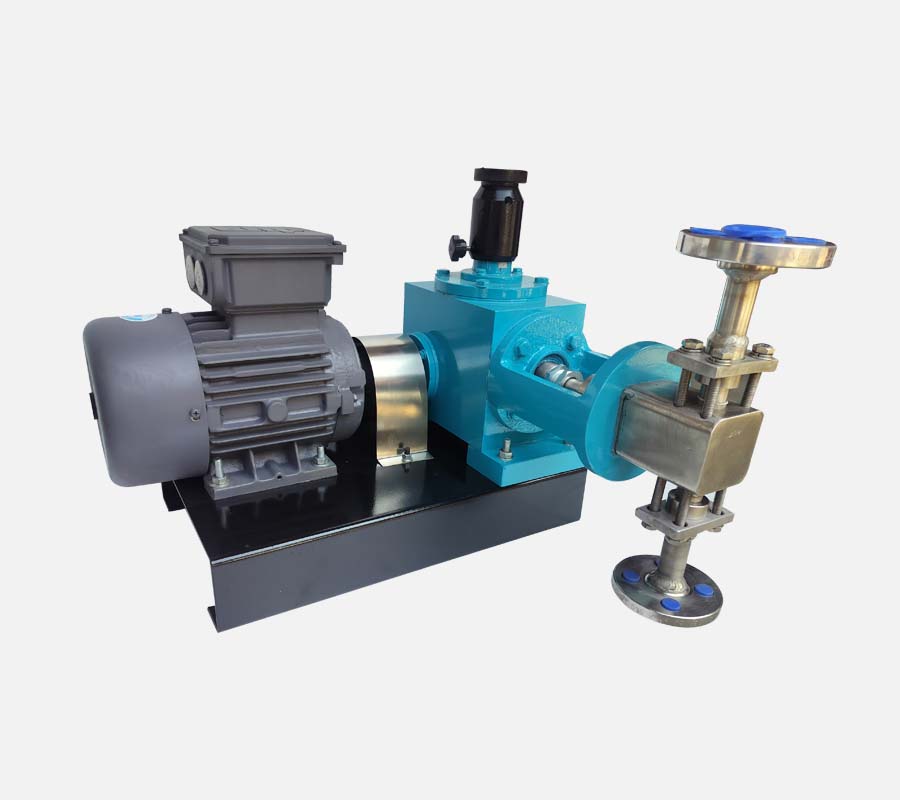
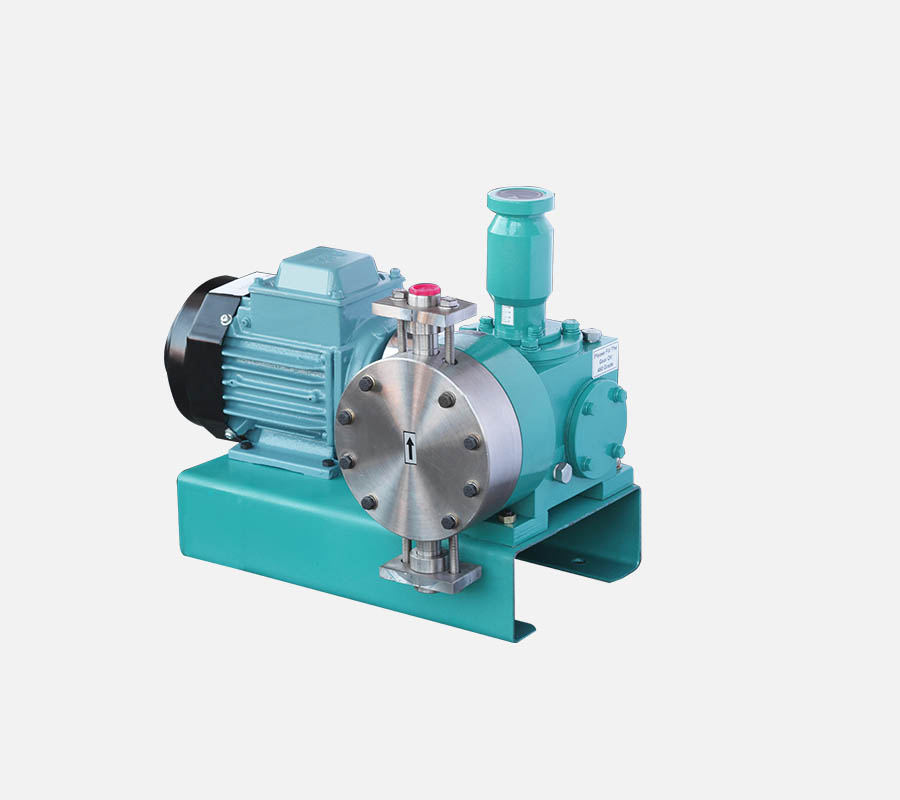
Plunger vs. Diaphragm Dosing Pump: Head-to-Head Comparison
To help industrial buyers across India make a quick and confident decision, let us compare these two technologies across the most important practical parameters.
1. Liquid Safety and Leakage
For any plant manager, safety is the number one priority.
- Plunger Pump: Because the plunger moves back and forth through a packing seal, there is a very tiny, microscopic chance of weeping or minor leakage over time as the seal wears. For non-toxic chemicals, clean water, oils, and harmless industrial fluids, this is never an issue.
- Diaphragm Pump: This design is 100% leak-proof. If you are dosing highly toxic acids, flammable solvents, or hazardous chemicals where a leak could harm your workers or damage the environment, the diaphragm design keeps everything perfectly contained.
2. High-Pressure Performance
If your industrial process requires pushing chemicals into pipelines that operate under massive pressure, the choice becomes very clear.
- Plunger Pump: A solid steel plunger does not bend, flex, or warp. This means a Plunger Dosing Pump can easily handle extremely high-pressure systems while maintaining its flow rate perfectly. This is why major industries across India prefer buying from a trusted Plunger Pump Manufacturer like Dosimix Technologies for heavy-duty applications.
- Diaphragm Pump: Because the diaphragm is flexible, pushing it against massive back-pressure puts a lot of stress on the elastic material. This can cause the diaphragm to rupture prematurely, leading to unexpected plant shutdowns.
3. Long-Term Maintenance and Cost of Ownership
In business, the purchase price is only a small part of the equation. You must look at the total cost over five to ten years.
- Plunger Pump: These pumps are mechanical workhorses. The solid plunger lasts for years. The only parts that require periodic replacement are simple seals and packing materials, which are very cheap and easy to replace. This makes the overall maintenance cost incredibly low.
- Diaphragm Pump: The flexible membrane has a limited lifespan. Depending on how often you run the pump, you will need to replace the diaphragm regularly. Replacing these specialized membranes can be highly expensive and requires skilled labor, increasing your long-term operational costs.
4. Dosing Accuracy and Control
If your application requires precise chemical dosing down to the milliliter, accuracy is non-negotiable.
- Plunger Pump: Because of the rigid, mechanical nature of the plunger, the volume of liquid moved per stroke is highly consistent. Even if the pressure in your pipeline fluctuates, a Plunger Dosing Pump from Dosimix Technologies will deliver the exact same amount of liquid every single time.
- Diaphragm Pump: Because the membrane can flex slightly differently depending on the pressure inside the pipe, the dosing accuracy can sometimes vary slightly when pipeline pressures change.
Why Indian Industries Prefer Plunger Dosing Pumps
Across India—from the industrial hubs of Gujarat and Maharashtra to the manufacturing units in Tamil Nadu and West Bengal—the Plunger Pump remains the preferred choice for most standard dosing applications.
Here is why Indian buyers continuously search for top-rated Plunger Pump Manufacturers to upgrade their plants:
- Incredible Value for Money: Indian business owners appreciate products that offer maximum return on investment. The long life and low spare-parts cost of a plunger system make it highly cost-effective.
- Heavy-Duty Reliability: Power fluctuations and tough operating environments are common in India. Plunger pumps are ruggedly built to handle these demanding conditions without breaking down.
- Easy Local Servicing: Unlike complex diaphragm systems that often require specialized foreign parts, a high-quality plunger system from an Indian manufacturer like Dosimix Technologies can be serviced easily by your in-house maintenance team, keeping downtime to an absolute minimum.
How to Choose: A Quick Buyer’s Decision Matrix
If you are currently sitting in your office trying to decide which pump to buy today, ask yourself these three simple questions:
- Is the chemical safe or dangerous? If you are pumping clean water, simple chemicals, boiler feeds, or non-hazardous fluids, buy a Plunger Pump. If you are pumping highly dangerous, corrosive, or foul-smelling chemicals, choose a Diaphragm Pump.
- What is the pressure of your system? For high-pressure industrial applications, a Plunger Dosing Pump is highly reliable and will not let you down.
- What is your budget for long-term maintenance? If you want a trouble-free pump with cheap, easily available spare parts, go with a plunger option.
Dosimix Technologies: Best Plunger Pump Manufacturer in India
When it comes to securing the heart of your industrial process, you cannot afford to compromise on quality. You need a partner who understands your local challenges, offers top-tier engineering, and provides lightning-fast customer support across the country.
This is where Dosimix Technologies stands out as the ultimate industry leader. As the premier Plunger Pump Manufacturer in India, we have built a reputation for manufacturing world-class dosing systems that keep Indian industries running efficiently.
Why Choose Dosimix Technologies?
- Unmatched Manufacturing Quality: We use premium materials and rigorous quality checks to ensure every Plunger Pump leaving our facility is built to last for decades.
- Pan-India Reach & Support: Whether your plant is located in Ahmedabad, Mumbai, Chennai, Delhi, or Kolkata, Dosimix Technologies provides rapid delivery and dependable on-site technical support.
- Customized Dosing Solutions: We do not believe in one-size-fits-all. Our experts study your specific liquid flow, pressure needs, and factory setup to provide a tailored system that maximizes your savings.
- Extremely Competitive Pricing: By manufacturing locally in India, we offer international-grade quality at highly affordable Indian prices, helping you build a highly profitable plant.
How to Get Started with Your Dosing Pump Upgrade
Choosing between a plunger and a diaphragm system does not have to be a confusing or stressful task. By focusing on your liquid type, system pressure, and maintenance goals, you can easily identify the exact machine you need.
If you want to eliminate the guesswork, avoid costly purchasing mistakes, and secure a high-performance Dosing Pump that will serve your business faithfully for years to do, it is time to talk to the experts.
At Dosimix Technologies, we help hundreds of businesses across India select, install, and maintain the perfect pump systems. Our team of experienced professionals is ready to guide you step-by-step to find the ultimate solution for your factory.
Don’t let inefficient pumping systems drain your profits. Reach out to Dosimix Technologies, the Best Plunger Pump Manufacturers in India, and get a highly competitive, customized quote for your plant today!
FAQs
The primary difference is their pumping mechanism. A Plunger Pump uses a solid metal plunger to move liquid with high accuracy and pressure, while a Diaphragm Pump uses a flexible membrane to create suction and discharge. Plunger Pumps are ideal for high-pressure, accurate dosing applications, whereas Diaphragm Pumps are preferred for hazardous and corrosive chemicals due to their leak-proof design.
A Plunger Dosing Pump is generally the better choice for high-pressure industrial applications. Its rigid plunger design allows it to maintain accurate flow rates even under extreme pressure conditions, making it suitable for water treatment, chemical processing, and power plants.
Plunger Pumps deliver highly precise dosing because the solid plunger moves a fixed volume of liquid during every stroke. This consistent movement ensures accurate chemical injection even when system pressure fluctuates.
Yes. Diaphragm Pumps are designed with a flexible membrane that completely separates the pumped liquid from the external environment. This makes them ideal for handling toxic, corrosive, hazardous, or environmentally sensitive chemicals where leakage cannot be tolerated.
A Plunger Pump typically has lower long-term maintenance costs. The main wear components are seals and packing materials, which are affordable and easy to replace. Diaphragm Pumps require periodic diaphragm replacement, which can be more expensive and time-consuming.
You should choose a Diaphragm Pump when handling highly corrosive acids, toxic chemicals, flammable solvents, or hazardous liquids where even minor leakage could pose safety or environmental risks.
Many Indian industries prefer Plunger Dosing Pumps because they offer high-pressure performance, excellent dosing accuracy, rugged construction, low maintenance costs, and a strong return on investment for long-term operations.
Yes, a Plunger Pump can handle certain corrosive chemicals when manufactured using compatible materials. However, for extremely aggressive or hazardous chemicals, a Diaphragm Pump is often recommended because of its completely sealed, leak-proof design.
To select the right dosing pump, evaluate:
- The type of chemical being pumped
- Required system pressure
- Desired dosing accuracy
- Maintenance budget
- Safety and leakage requirements
For non-hazardous liquids and high-pressure applications, a Plunger Pump is usually the preferred solution. For hazardous chemicals, a Diaphragm Pump is often the safer option.
Many industrial buyers consider Dosimix Technologies a trusted Plunger Pump manufacturer in India due to its high-quality dosing systems, customized engineering solutions, pan-India support, competitive pricing, and focus on long-term reliability.