

Why Is Your Chlorination Dosing System Failing to Maintain Residual Chlorine?
If you are running an industrial plant, a housing society, a water treatment facility, or a commercial complex in India, clean water is critical to your daily operations. To keep water safe and free from bacteria, you rely heavily on your Chlorination Dosing System.
But lately, you might have noticed a frustrating problem: the residual chlorine levels in your water keep dropping.
No matter how much chlorine chemical you add, the testing kit still shows low or zero residual chlorine. This is a highly risky situation. Low chlorine levels can lead to dirty water, bacterial growth, government compliance failures, and complaints from your clients or residents.
Why does this happen? Is it a problem with the chemical, or is your equipment letting you down?
In this easy-to-read guide, we will look at the real, practical reasons why your Dosing System is failing to maintain residual chlorine and how choosing the right Chlorination Dosing System Manufacturer can solve this headache once and for all.
What is Residual Chlorine and Why is It So Important?
Before we look at the failures, let us understand this in the simplest way possible.
When you inject chlorine into water using a Chlorination Dosing System, the chlorine immediately starts fighting and killing bacteria, algae, and organic impurities present in the water.
- Consumed Chlorine: This is the portion of chlorine used up during the disinfection process.
- Residual Chlorine: This is the “extra” chlorine left behind in the water after the initial cleaning is done.
This residual chlorine is your shield. It travels through your pipes, storage tanks, and delivery lines to ensure that no new bacteria grow in the water before it reaches the final user. If your water does not have enough residual chlorine, it means your water is unprotected and unsafe.
5 Simple Reasons Your Chlorination Dosing System is Failing
If you are struggling to maintain the right chlorine levels, one or more of the following issues are likely occurring at your site:
1. Your Dosing Pump Lacks Accuracy and Consistency
Many local systems use cheap, low-grade pumps that do not pump chemicals at a steady rate. If your pump doses too slowly, there will not be enough chlorine to leave a residual level. If it doses too quickly, it can ruin your water quality and waste expensive chemicals.
A low-quality pump also suffers from frequent air-locks, where the pump keeps running but no actual chemical is being injected. This is why buying your system from a trusted Chlorination Dosing System Manufacturer is crucial to getting a pump that works reliably 24/7.
2. Sudden Changes in Water Quality or Flow Rate
Water does not always flow at the exact same speed, and its dirt levels can change throughout the day. If your water suddenly gets dirtier (higher organic load) or the flow rate increases, the amount of chlorine you were previously dosing will no longer be enough.
All the injected chlorine will get used up immediately trying to clean the extra dirt, leaving zero residual chlorine in the final water tank. If your current setup cannot adapt to these daily changes, you will always face inconsistent results.
3. Poor Chemical Quality and Storage
Chlorine liquid (Sodium Hypochlorite) is highly sensitive to heat and sunlight. If you store your chemicals in an open area under the hot Indian sun, the chlorine will quickly lose its strength.
When your chemical loses its power, even a perfectly functioning Chlorination Dosing System cannot maintain residual levels because you are essentially dosing weak, useless liquid into your water lines.
4. Poor Mixing in the Pipeline
For chlorine to work effectively, it must mix thoroughly with the incoming water. If your system injects the chemical at a point where the water flow is too slow, or if there is not enough contact time in the pipeline, the chlorine will not mix well. You might get high chlorine readings in one corner of your tank and absolutely zero in another.
5. Constant Breakdowns and Lack of Local Service Support
Let’s be honest: many buyers purchase cheap setups from local traders to save a little money. However, these systems break down constantly, leak chemical fumes, and have zero warranty or support. When your system is down, your chlorine levels drop to zero, putting your entire business operations at risk.
How Inconsistent Chlorine Levels Hurt Your Business
Maintaining residual chlorine is not just a technical requirement—it is a critical business need. Here is how a failing system can damage your bottom line:
- Government Norms & Fines: Indian regulatory bodies have strict guidelines for water safety. Failing to maintain proper residual chlorine can lead to heavy penalties, legal notices, and even closure of your plant.
- Unplanned Downtime: If your water gets contaminated, you may have to stop your production line, drain thousands of litres of water, and clean your storage tanks from scratch. This wastes time, labour, and money.
- Loss of Brand Reputation: Whether you run a food processing plant, a pharma unit, a textile factory, or a residential township, the supply of dirty or unsafe water can permanently damage your reputation among customers and residents.
- Damage to Pipes and Machinery: Algae and bacteria build up inside your water pipelines can choke your pipes and damage expensive industrial machinery, leading to massive repair bills.
Invest in a Reliable Chlorination Dosing System
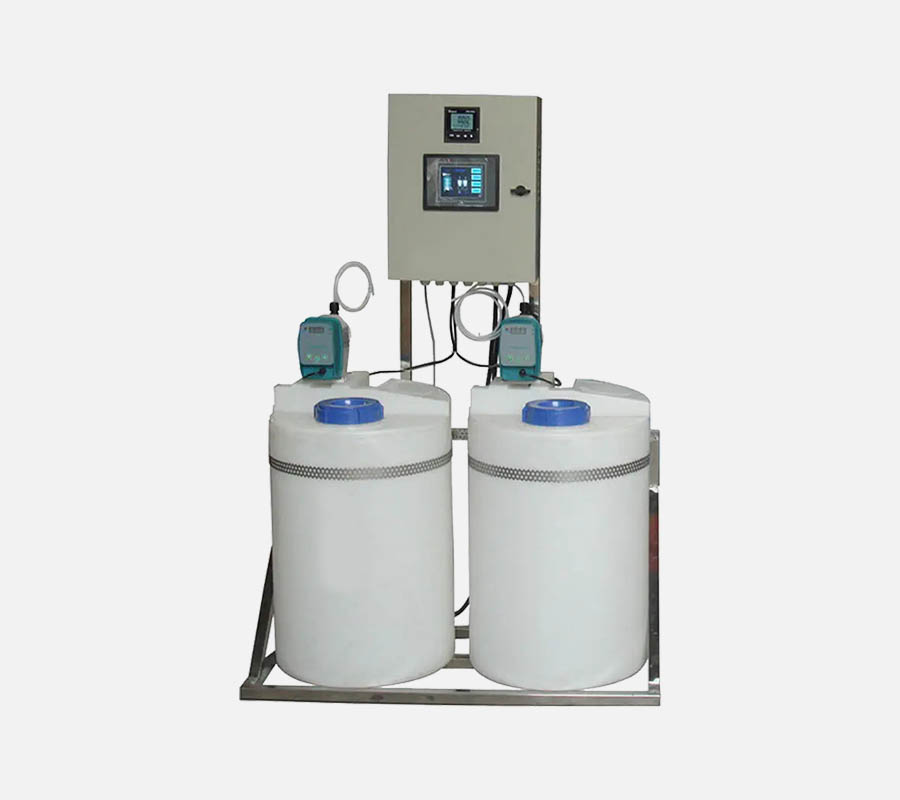
To get rid of these daily water worries, you need more than just a quick fix. You need a highly reliable, automatic, and robust Chlorination Dosing System that does the job without needing constant human monitoring.
This is where your choice of partner matters. Instead of buying cheap, unbranded equipment, you must partner with the Best Chlorination Dosing System Manufacturers in India who understand your local water conditions, budget, and operational goals.
Why Choose Dosimix Technologies?
If you want a tension-free solution for your water chlorination needs, Dosimix Technologies is your ultimate partner. As the leading Chlorination Dosing System Manufacturer, we design systems that are incredibly easy to operate, highly accurate, and built specifically for tough Indian industrial environments.
Here is why industrial buyers across India trust Dosimix Technologies for their water treatment needs:
1. Unmatched Reliability and Accuracy
Our systems are engineered to deliver precise chemical dosing day after day. No more worrying about air-locks, chemical leakages, or sudden drops in residual chlorine. Our pumps ensure that the exact amount of chlorine is injected to maintain safe water at all times.
2. Built for Indian Industrial Conditions
We understand that water quality, power fluctuations, and weather conditions in India are highly demanding. Our systems are built using premium, durable materials that can withstand continuous usage without breaking down.
3. Highly Cost-Effective (Saves Chemical Costs)
Because our dosing systems are highly precise, you will never waste expensive chemicals. We help you optimize your chemical usage, directly reducing your monthly operating costs and saving you thousands of rupees.
4. Easy to Use (No Tech Experts Needed)
You do not need an engineer or a technical expert to run our systems. Our designs are extremely user-friendly and can be operated easily by your existing utility staff with basic training.
5. Pan-India Delivery and Excellent After-Sales Support
No matter where your facility is located in India—whether it is a bustling industrial hub or a remote town—Dosimix Technologies delivers directly to your doorstep. More importantly, we provide quick, dependable customer service and spare parts support so your plant never faces downtime.
Get in Touch with the Best Chlorination Dosing System Manufacturers in India
Stop wasting your time, money, and energy dealing with manual chemical mixing, unreliable local pumps, and constantly fluctuating chlorine levels. Protect your factory, your employees, and your business reputation by installing a premium-grade system from Dosimix Technologies.
Our team of experts will help you choose the perfect Chlorination Dosing System tailored to your specific flow rates and water needs—with zero confusing technical jargon.
Contact Dosimix Technologies Today!
Are you ready to solve your residual chlorine problems for good and get clean, compliant, and safe water?
Let us handle your water purification so you can focus entirely on growing your business!
Contact US : +91 76007 37948 , sales@dosimixtechnologies.com
FAQs
A chlorination dosing system may fail to maintain residual chlorine due to inaccurate dosing pumps, poor chlorine quality, sudden changes in water flow, inadequate mixing, air-locks in the pump, or equipment breakdowns. Regular maintenance and accurate dosing equipment are essential for consistent chlorine residual levels.
For most water treatment applications, the recommended residual chlorine level is typically between 0.2 ppm and 0.5 ppm at the point of use. Maintaining this level helps prevent bacterial growth and ensures safe water distribution throughout pipelines and storage tanks.
A faulty dosing pump can underdose or overdose chlorine, causing inconsistent residual chlorine levels. Common pump issues include air-locks, worn diaphragms, clogged injection points, and inaccurate flow rates, all of which reduce chlorination efficiency.
Yes. Sodium hypochlorite loses strength when exposed to heat, sunlight, or improper storage conditions. Even if the dosing system is functioning correctly, weakened chlorine chemicals can result in low or zero residual chlorine levels.
When water contains higher levels of organic matter, bacteria, or contaminants, more chlorine is consumed during disinfection. This leaves less chlorine available as residual chlorine, causing chlorine levels to drop below recommended limits.
Proper mixing is critical because chlorine must be evenly distributed throughout the water. Poor mixing can create uneven chlorine concentrations, resulting in some areas receiving adequate disinfection while others have insufficient residual chlorine.
Common signs include fluctuating chlorine readings, frequent pump stoppages, chemical leaks, unusual pump noise, inconsistent dosing rates, air-lock problems, and recurring low residual chlorine levels. Routine inspections help prevent unexpected failures.
An automatic chlorination dosing system continuously delivers accurate chemical dosing based on water demand. This improves residual chlorine control, reduces chemical waste, minimizes human error, and ensures consistent water quality compliance.
Chlorination dosing systems are widely used in water treatment plants, pharmaceutical manufacturing, food processing industries, textile units, commercial buildings, hospitals, residential societies, and industrial facilities requiring safe and disinfected water.
A professional chlorination dosing system manufacturer provides reliable equipment, accurate dosing technology, quality components, technical support, warranty coverage, and customized solutions. This helps maintain stable residual chlorine levels while reducing operational costs and downtime.