

Why Does Chemical Mixing Become Inconsistent During Batch Processing? Causes and Solutions
Batch processing is the heart of chemical manufacturing. Whether you are producing paints, specialty chemicals, polymers, or liquid fertilizers, getting a smooth and uniform blend in every single batch is essential. However, many plant operators and chemical engineers face a frustrating challenge: inconsistent chemical mixing during batch processing.
One batch comes out perfect, but the next batch turns out uneven, lumpy, or chemically unbalanced. This variation leads to wasted raw materials, lost production time, and unsatisfied customers.
Why does this happen? What causes uneven mixing in batch production, and how can you solve it permanently?
In this comprehensive guide, we will break down the real causes behind inconsistent chemical mixing and explore the most effective solutions to ensure perfect batch uniformity every single time.
The Hidden Cost of Inconsistent Chemical Mixing
When chemical mixing fails to achieve complete uniformity, the consequences extend far beyond a single bad tank of liquid. Inconsistent mixing directly impacts your business bottom line:
- Wasted Raw Materials: Undissolved solids or unmixed liquids often settle at the bottom of the vessel, resulting in discarded product.
- Product Quality Failures: If chemical reactions do not complete uniformly, the end product will fail quality tests.
- Increased Processing Time: Running the mixing equipment for extra hours to fix a poor batch consumes excess power and delays delivery timelines.
- Equipment Wear and Tear: Overworking low-quality mixing equipment leads to early mechanical failures and frequent maintenance stops.
To eliminate these expensive problems, you must first understand why your current batch process is failing to deliver consistent results.
Major Causes of Inconsistent Chemical Mixing in Batch Processing
Chemical mixing is a sensitive process. Small changes in liquid dynamic behavior or improper equipment selection can ruin batch uniformity. Here are the main causes:
1. Using the Wrong Type of Mixing Equipment
Not all mixers are created equal. Using a generic industrial mixer for complex chemical blending is one of the biggest mistakes in plant design. Different chemicals require specific flow patterns—axial flow, radial flow, or high shear—depending on their viscosity and solid content. If your mixing unit cannot match your fluid requirements, inconsistent mixing is guaranteed.
2. Poor Vessel and Impeller Design
The shape of your mixing tank and the design of the rotating blades play a critical role. If the impeller blade is improperly sized, too small, or placed at an incorrect height within the vessel, dead zones will form. Dead zones are areas inside the tank where liquid remains stationary and completely unmixed.
3. Viscosity Variations During Batch Processing
In batch processing, chemical viscosity often changes as ingredients are added or as temperatures shift. A mixer designed only for thin, watery fluids will struggle when the mixture thickens. Without a reliable mixing unit that adapts to changing fluid thickness, batch consistency drops dramatically.
4. Poor Solid Suspension and Dissolution
When blending powders into liquids, solids tend to sink to the bottom of the tank. If the fluid circulation inside the vessel is not strong enough, these solid particles form a heavy sludge layer at the base. This leads to incomplete chemical reactions and varying concentration levels across batches.
5. Inadequate Fluid Motion and Circulation
Simply swirling liquid around in a circle inside a tank is not true mixing. Without proper fluid displacement, liquids merely rotate together without blending. Proper mixing requires strong top-to-bottom circulation to bring raw materials together smoothly.
Practical Solutions for Consistent Batch Mixing
Overcoming mixing inconsistencies requires a direct, practical approach. By upgrading your processing strategy and choosing top-quality equipment, you can maintain smooth production runs every day.
Solution 1: Choose Purpose-Built Mixing Units
Do not rely on standard, off-the-shelf equipment for complex chemical processing. Invest in high-performance equipment specifically built for chemical applications. Selecting the right Agitator For Chemical Process Plants ensures that fluid flow and blade speeds match your exact chemical properties.
Solution 2: Work with a Proven Manufacturer
Partnering with an experienced Agitator Manufacturer guarantees custom engineering support. A specialized manufacturer evaluates your liquid viscosity, tank dimensions, and process goals before recommending equipment, eliminating trial-and-error guesswork.
Solution 3: Optimize Tank Flow Patterns
Ensure your tank setup uses proper baffles and optimized blade placement to break up swirl patterns and eliminate dead zones. Good internal circulation guarantees every drop of fluid receives equal mixing energy.
Solution 4: Upgrade to Industry-Leading Equipment
Upgrading your batch processing setup with units designed by a trusted Industrial Agitator Manufacturer boosts operational performance, lowers energy usage, and maintains batch quality day after day.
Why Dosimix Technologies Is the Ultimate Choice for Chemical Process Plants
When chemical process plants in India need complete mixing accuracy, they trust Dosimix Technologies. Recognized widely as the provider of the Best Agitator For Chemical Process Plants Manufacturers in india, Dosimix Technologies delivers world-class industrial mixing solutions designed for long-term efficiency and trouble-free operations.
Here is why top process engineers and plant managers choose Dosimix Technologies:
1. Superior Engineering and Customization
Every chemical process is unique. Dosimix Technologies designs custom mixing solutions tailored to your specific fluid dynamics, tank dimensions, and batch volume requirements. With Dosimix Technologies, you never receive a generic product; you get a solution engineered to solve your exact processing challenges.
2. Elimination of Dead Zones and Batch Variation
Mixing units built by Dosimix Technologies create deep, uniform fluid movement from the top of the vessel right down to the tank bottom. This powerful circulation eliminates unmixed areas, stops solid settlement, and guarantees 100% uniform batch composition every single time.
3. Energy-Efficient and Long-Lasting Construction
Dosimix Technologies focuses on building highly efficient systems that deliver maximum mixing force with minimal power consumption. Built using robust, corrosion-resistant materials, equipment from Dosimix Technologies withstands harsh chemical environments and demanding continuous operations without frequent breakdowns.
4. Comprehensive Range of Mixing Systems
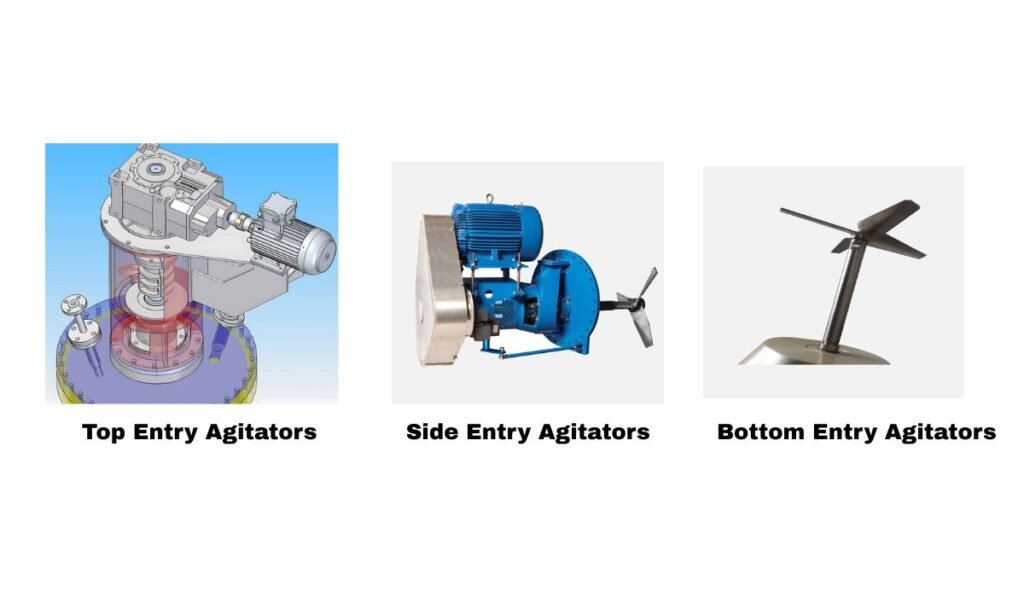
As a trusted Agitator For Chemical Process Plants Manufacturer, Dosimix Technologies offers a wide range of top-entry, side-entry, and specialized custom designs suitable for:
- Fine and Specialty Chemicals
- Polymers and Resins
- Paints, Inks, and Coatings
- Water and Wastewater Treatment
- Agrochemicals and Liquid Fertilizers
- Trusted Industry Expertise and Support
As a premier Agitator Manufacturer and leading Industrial Agitator Manufacturer, Dosimix Technologies provides end-to-end technical support—from initial process evaluation and custom design selection to installation support and long-term reliable service.
Key Benefits of Upgrading to Dosimix Technologies Equipment
Investing in high-performance mixing systems from Dosimix Technologies provides immediate advantages for your plant:
- Consistent Product Quality: Achieve uniform chemical reaction rates and precise viscosity in every batch.
- Reduced Batch Processing Time: Faster fluid displacement lowers cycle times, allowing your facility to produce more batches per shift.
- Lower Operational Costs: Efficient mechanical designs from Dosimix Technologies reduce total electricity consumption and minimize maintenance downtime.
- Zero Material Waste: Complete solid suspension ensures no valuable raw materials are left behind at the bottom of the tank.
How to Select the Right Mixing Solution for Your Plant
To prevent batch inconsistency permanently, consider these simple steps when upgrading your production line:
- Identify Your Fluid Properties: Note down your raw material viscosity, solid content percentage, and reaction speeds.
- Review Tank Geometry: Measure your tank height, diameter, and shape to determine the ideal impeller size and placement.
- Consult the Experts at Dosimix Technologies: Partnering directly with Dosimix Technologies gives you access to expert guidance, ensuring you select the ideal Agitator For Chemical Process Plants for your exact requirements.
Achieve Perfect Batch Consistency Today
Inconsistent chemical mixing ruins product quality, wastes money, and slows down production lines. By understanding the root causes—such as incorrect equipment choice, dead zones, and poor fluid circulation—you can take clear steps to upgrade your batch processing setup.
Choosing the right equipment supplier makes all the difference. As the provider of the Best Agitator For Chemical Process Plants Manufacturers in india, Dosimix Technologies offers the ideal combination of robust engineering, complete batch reliability, and cost-effective operation.
Whether you need to upgrade an existing processing tank or design a new chemical manufacturing line, Dosimix Technologies delivers durable, efficient mixing units that eliminate batch variation forever.
Reach out to Dosimix Technologies today to discover how custom-engineered solutions can transform your batch processing quality and drive operational success.
FAQs
Chemical mixing becomes inconsistent during batch processing due to incorrect agitator selection, poor impeller positioning, changing liquid viscosity, inadequate fluid circulation, and insufficient solid suspension. These issues create dead zones inside the tank, resulting in uneven ingredient distribution and variations in final product quality.
The most common causes include improper agitator design, incorrect impeller size, poor tank geometry, inadequate baffles, changing chemical viscosity, and insufficient mixing speed. These factors prevent uniform fluid movement and can cause some ingredients to remain unmixed.
Manufacturers can improve mixing consistency by selecting the correct industrial agitator, optimizing impeller placement, installing suitable baffles, and maintaining proper fluid circulation. Evaluating liquid viscosity, solid content, and tank dimensions also helps achieve uniform mixing across batches.
An industrial agitator creates controlled fluid movement inside a mixing vessel, helping distribute ingredients evenly throughout the tank. Depending on the application, it can improve liquid blending, solid suspension, powder dissolution, and chemical uniformity during batch production.
Dead zones develop when fluid movement is insufficient in certain areas of a mixing tank. Incorrect impeller positioning, unsuitable blade design, poor tank geometry, and inadequate baffles can prevent proper circulation, leaving some chemicals unmixed.
Liquid viscosity determines how easily a chemical mixture flows inside a tank. High-viscosity liquids require suitable agitator designs and sufficient mixing power to maintain circulation. If the equipment is not selected according to viscosity changes, ingredients may remain unevenly distributed.
The suitable agitator depends on liquid viscosity, batch volume, solid content, tank dimensions, and the required mixing result. Top-entry, side-entry, and specialized industrial agitators are commonly selected for different chemical processing applications. A process evaluation helps identify the appropriate design.
Manufacturers can prevent solid settlement by selecting an agitator that generates sufficient circulation and suspension throughout the vessel. Correct impeller selection, blade positioning, and mixing speed help keep solid particles distributed and reduce sludge formation at the tank bottom.
Impeller design determines the direction and strength of fluid movement inside a mixing tank. An incorrectly sized or positioned impeller may create poor circulation and unmixed areas. The correct impeller design improves blending efficiency, solid suspension, and overall batch uniformity.
To select the right agitator for chemical process plants, evaluate the liquid viscosity, chemical properties, solid concentration, tank dimensions, batch capacity, and required mixing performance. Consulting an experienced agitator manufacturer helps identify a suitable mixing solution for specific production requirements.
A specialized industrial agitator manufacturer understands different chemical mixing requirements and can recommend equipment according to process conditions. Custom engineering, suitable impeller selection, material compatibility, and technical support help manufacturers improve mixing consistency and reduce operational problems.
Dosimix Technologies provides industrial mixing solutions designed for chemical processing applications. Its agitator range includes top-entry, side-entry, and customized designs for applications involving specialty chemicals, polymers, paints, resins, water treatment, and liquid fertilizers. The equipment selection can be tailored to tank dimensions and process requirements to support reliable batch mixing.