

How Do You Stop Mechanical Seal Failures in Chemical Agitators?
If you run a chemical processing plant in India, you already know the nightmare of a sudden production shutdown. You are in the middle of a high-value batch, and suddenly, the agitator stops working. The culprit? A leaking, damaged, or completely failed mechanical seal.
In chemical plants, mechanical seal failure in an industrial agitator is one of the most common and expensive maintenance headaches. It leads to raw material wastage, toxic chemical leaks, environmental hazards, and massive downtime losses.
But why do these seals fail so often, and how can you stop it?
As a leading industrial agitator manufacturer, we understand that a robust mixing system is the heart of your chemical process. In this guide, we will break down the exact steps to stop mechanical seal failures in your chemical mixers and help you choose the right equipment to keep your plant running smoothly.
The True Cost of Seal Failures in Chemical Plants
For any purchase manager or plant head, buying an agitator for chemical process plants is not just about comparing quotes. It is about calculating the total cost of ownership.
When a seal fails on a cheap, poorly designed mixer, you aren’t just paying for a new seal. You are paying for:
- Production Loss: Hours or days of idle plant operations.
- Product Contamination: Gland fluids or external air leaking into your chemical reactor.
- Safety Hazards: Toxic or flammable gases escaping into the work environment.
- Frequent Repairs: Wasting your engineering team’s time on repetitive maintenance.
To stop this cycle, we first need to understand why these failures happen in the first place.
Why Do Mechanical Seals Fail in Industrial Agitators?
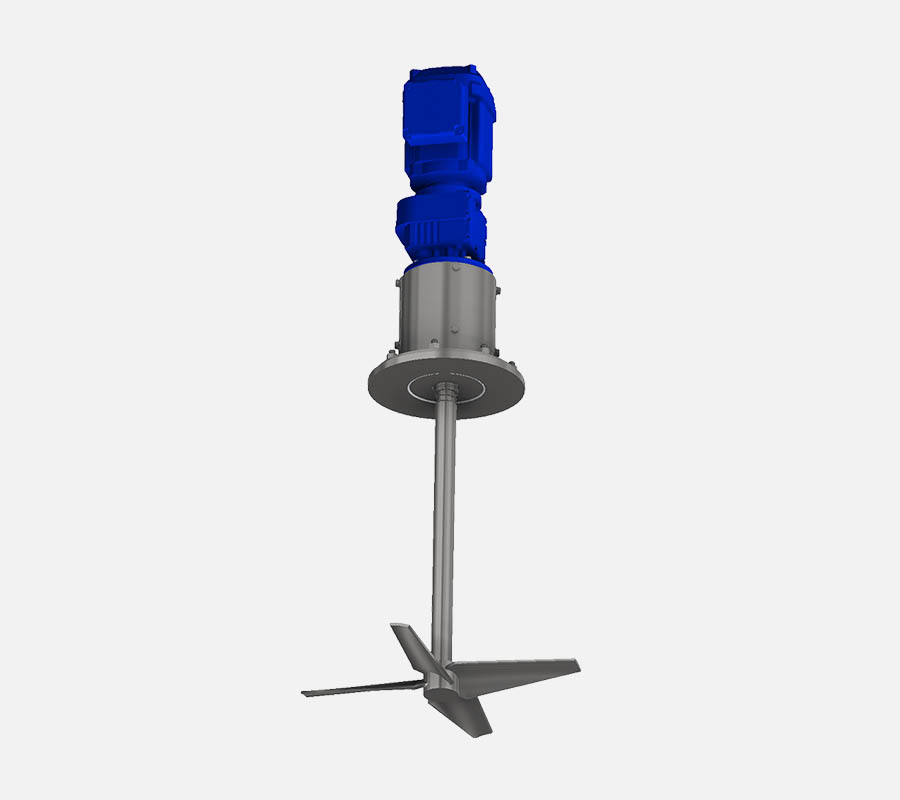
Unlike pumps, where the shaft is short and rigid, an industrial agitator mixer has a very long, overhung shaft. This unique design creates specific challenges that directly impact seal life.
1. Shaft Runout and Deflection
Because the shaft of an agitator is long, it naturally experiences bending forces (deflection) during mixing, especially when handling high-viscosity chemicals or solids. If the shaft wobbles even by a fraction of a millimeter, it puts uneven pressure on the mechanical seal faces, causing them to crack or wear out prematurely.
2. Dry Running
Mechanical seals require lubrication to keep the seal faces cool. If the liquid level in your chemical reactor drops below the seal area, or if the seal barrier fluid is not maintained, the seal faces rub against each other dry. The friction generates extreme heat, destroying the seal within minutes.
3. Chemical Incompatibility
Chemical plants handle highly corrosive acids, solvents, and abrasive slurries. If the seal face materials (like Silicon Carbide, Tungsten Carbide, or Carbon) or the elastomer O-rings are not chemically compatible with your process materials, they will corrode, swell, or disintegrate.
4. Poor Bearing Design
If the bearings supporting the shaft are not strong enough to absorb the radial and axial loads generated during mixing, the excess vibration is transferred directly to the mechanical seal.
How to Stop Mechanical Seal Failures: The Step-by-Step Solution
Preventing seal failure requires a combination of proper operation, regular maintenance, and—most importantly—partnering with the right agitator mixer manufacturer who understands robust engineering.
Step 1: Choose the Right Seal Design for Your Process
Do not use standard, off-the-shelf seals for complex chemical processes. Work with your manufacturer to select:
- Single Mechanical Seals: Best for non-hazardous, low-pressure applications.
- Double Mechanical Seals: The gold standard for toxic, volatile, or hazardous chemical reactions. They use a pressurized barrier fluid between two seals to ensure no chemical can escape.
- Dry Running Seals: Perfect for top-entry mixers where liquid lubricants cannot be used due to contamination risks.
Step 2: Install a Robust Bearing Housing (Lantern Lantern/Pedestal)
A well-designed industrial agitator should have an independent bearing housing situated just above the seal. This housing absorbs the heavy mechanical loads and vibrations of the mixing process, keeping the shaft perfectly aligned where it passes through the mechanical seal.
Step 3: Implement Proper Seal Support Systems (Thermosiphon Systems)
For double mechanical seals, always use a properly maintained barrier fluid system (often called a Thermosiphon pot). This system keeps the seal faces lubricated, cool, and clean. Ensure your operators monitor the pressure and level of this barrier fluid daily.
Step 4: Run the Agitator Within Designed Limits
Avoid running your mixer at speeds or viscosity levels higher than what it was built for. Also, avoid “vortexing” or running the agitator when the tank is empty, as this causes violent shaft movement that quickly shatters seal faces.
Step 5: Partner with a Trusted Manufacturer
The most effective way to eliminate seal problems is to buy a system that is engineered correctly from day one. A cheap mixer will always cost you more in maintenance. Invest in high-quality equipment designed by an experienced industrial agitator manufacturer.
Looking for the Best Agitator Manufacturers in India? Choose Dosimix Technologies
When it comes to high-performance, zero-leak mixing systems, chemical plants across India trust Dosimix Technologies.
We are recognized as one of the best agitator manufacturers in India, specializing in designing and building custom mixing solutions that solve your real-world process challenges. Whether you need a high-pressure reactor mixer, a slurry agitator, or a high-shear mixer, we deliver reliable engineering that stands the test of time.
Why Indian Chemical Plants Choose Dosimix Technologies:
- Custom-Engineered Shaft and Seal Protection: At Dosimix, we do not believe in one-size-fits-all. Our engineering team calculates the exact shaft deflection and torque requirements of your process to design a robust bearing assembly. This ensures virtually zero shaft wobble, keeping your mechanical seals safe and extending their lifespan.
- High-Quality Materials: We manufacture our mixers using premium grade Stainless Steel (SS316, SS304), Hastelloy, and specialized coatings that resist corrosive chemical attacks.
- Expert Integration of Seal Systems: We work closely with leading global seal manufacturers to integrate high-efficiency single, double, or gas-lubricated cartridge mechanical seals with custom-built seal support systems.
- Pan-India Presence and Service: From chemical hubs in Gujarat and Maharashtra to manufacturing zones in South and North India, Dosimix Technologies serves clients nationwide with prompt delivery, setup assistance, and reliable after-sales support.
Buy Directly from the Expert Agitator Mixer Manufacturer
Why buy from dealers when you can partner directly with the manufacturer? Buying directly from Dosimix Technologies ensures you get:
- Factory-Direct Pricing: No middleman markups.
- Custom Engineering: An agitator tailored precisely to your tank size, chemical viscosity, and process temperature.
- Reliable Warranty & Parts Support: Easy access to genuine spares, shafts, impellers, and seal kits when you need them.
Don’t let frequent mechanical seal failures eat into your plant’s profits and delay your production timelines. It is time to upgrade to an engineered solution that works.
Contact Dosimix Technologies Today!
Are you planning to install a new agitator for chemical process plants, or looking to upgrade your existing failing mixing systems?
Our team of experts is ready to assist you. Let us help you select, design, and install the perfect industrial agitator mixer that guarantees leak-free, continuous operation.
Get a free technical consultation and customized quote for your plant today! Reach out to Dosimix Technologies—your trusted partner for high-efficiency mixing across India.
FAQs
Mechanical seals in industrial agitators usually fail because of shaft deflection, dry running, excessive vibration, chemical incompatibility, poor bearing support, or improper seal selection. In chemical process plants, long agitator shafts create additional stress on seals, causing premature wear and leakage.
You can prevent mechanical seal leakage by using the correct seal type, maintaining proper lubrication, installing robust bearing housings, monitoring seal support systems, and operating the agitator within designed RPM and viscosity limits. Choosing a high-quality industrial agitator manufacturer also significantly reduces failure risks.
Double mechanical seals are considered the best option for hazardous, toxic, flammable, or high-pressure chemical processes. These seals use a pressurized barrier fluid system to prevent chemical leakage and improve operational safety in chemical plants.
Shaft wobbling, also called shaft runout or deflection, occurs due to long agitator shafts, high-viscosity fluids, improper bearing design, excessive mixing loads, or incorrect impeller sizing. This movement damages seal faces and shortens seal life.
Dry running causes seal faces to operate without lubrication or cooling fluid. This generates excessive heat and friction, which can crack, burn, or completely destroy the mechanical seal within minutes. Maintaining proper liquid levels and barrier fluids is critical.
For corrosive chemical applications, seal materials like Silicon Carbide, Tungsten Carbide, Hastelloy, Viton, PTFE, and Carbon are commonly used. The correct material depends on the chemical composition, temperature, pressure, and abrasiveness of the process fluid.
A thermosiphon system continuously circulates barrier fluid around double mechanical seals to keep them lubricated, cooled, and clean. This reduces friction, prevents overheating, and significantly increases seal reliability in industrial agitators.
Common signs include chemical leakage near the shaft, unusual vibration, overheating, abnormal noise, increased power consumption, reduced mixing efficiency, and visible wear around the seal housing. Early detection helps avoid costly shutdowns.
A robust bearing housing absorbs radial and axial loads generated during mixing operations. It stabilizes the agitator shaft, minimises vibration, and keeps the shaft aligned at the seal area, preventing premature mechanical seal damage.
Leading industrial agitator manufacturers use custom-engineered shaft designs, precision bearing assemblies, high-quality seal systems, corrosion-resistant materials, and advanced seal support systems. Companies like Dosimix Technologies design agitators specifically for Indian chemical process conditions to ensure leak-free and reliable operation.