

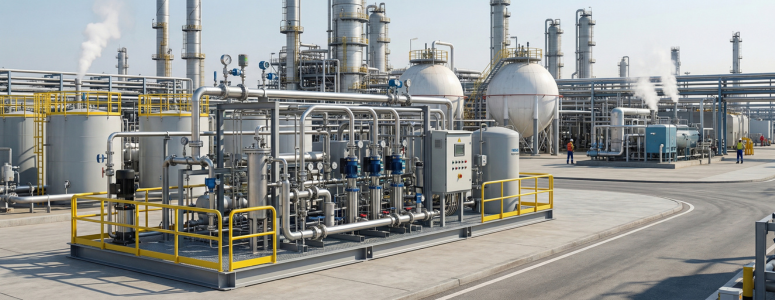
Chemical Injection Skids: Working Principle, Applications & Trusted Manufacturer
In the complex world of industrial processing, maintaining the integrity of pipelines and ensuring the purity of fluids is a daily challenge. Whether you are managing an offshore oil rig, a busy water treatment plant, or a petrochemical facility, the precise addition of chemicals is not just a requirement—it is a necessity for safety and efficiency. This is where the Chemical Injection Skid comes into play.
For plant managers and engineers looking to optimize their operations, understanding the function and value of these systems is critical. This comprehensive guide will walk you through the working principles, key applications, and pricing factors of these essential systems. We will also introduce you to Dosimix Technologies, a leading Chemical Injection Skid Manufacturer known for delivering robust solutions globally.
What is a Chemical Injection Skid?
A Chemical Injection Skid is a modular, integrated system designed to dose precise amounts of chemicals into a system at required pressures. Unlike standalone pumps that require on-site assembly of piping and valves, a “skid” is a pre-engineered package. All the necessary components—tanks, pumps, valves, gauges, and control panels—are mounted on a single, sturdy steel frame (the skid).
The primary purpose of these skids is to inject chemicals such as corrosion inhibitors, biocides, demulsifiers, oxygen scavengers, and scale inhibitors into a process stream. Because they are pre-assembled, they offer a “plug-and-play” solution that significantly reduces installation time and minimizes the risk of leakage or assembly errors on site.
For companies searching for Chemical Injection Skids in India, the shift towards these modular units has revolutionized how factories handle hazardous chemicals, moving away from manual dosing to fully automated, safe injection systems.
The Working Principle: How Does It Work?
Understanding the working principle of a chemical injection system is key to appreciating its value. While the engineering can be complex, the concept is straightforward.
Chemical Storage
The process begins in the storage tank. This tank, usually mounted on the skid, holds the specific chemical to be dosed. The tank is equipped with level gauges to monitor the chemical volume and often includes a low-level alarm to alert operators when a refill is needed.
Suction and Metering
The heart of the skid is the dosing pump (or metering pump). The pump draws the chemical from the tank through a suction line. A strainer (filter) in the suction line ensures that no solid particles enter the pump, which could damage the internal mechanism.
Pressurization and Injection
The metering pump pressurizes the chemical to a level slightly higher than the pressure in the main process line. This ensures that the chemical can flow into the line smoothly. The pump pushes the chemical through the discharge piping, which is fitted with a pulsation dampener to ensure a smooth, continuous flow without surges.
Control and Safety
Before the chemical enters the process line, it passes through a series of valves:
- Pressure Relief Valve (PRV): A safety device that redirects the chemical back to the tank if the pressure gets too high, preventing pipe bursts.
- Back Pressure Valve: Ensures the pump works against a constant pressure for accurate dosing.
- Check Valve: Prevents the main process fluid from flowing back into the chemical skid.
The entire process is often controlled by a Local Control Panel (LCP), which allows operators to set the exact flow rate (e.g., liters per hour) required for the process.
Critical Components of a Chemical Injection Skid
To ensure long-term reliability, a high-quality skid is composed of several specialized components. When you contact a Chemical Injection Skid Manufacturer, you will typically discuss these key parts:
- Dosing Pumps: The most critical component. Depending on the application, these can be plunger pumps (for high pressure) or diaphragm pumps (for leak-free operation).
- Storage Tank: Fabricated from Stainless Steel (SS304/SS316) for durability or High-Density Polyethylene (HDPE) for corrosive acids.
- Calibration Pot: A small cylinder used to verify and calibrate the flow rate of the pump manually.
- Skid Structure: A heavy-duty steel frame, often epoxy-painted or hot-dip galvanized to resist environmental corrosion.
- Instrumentation: Includes pressure gauges, flow transmitters, and level switches that provide real-time data to the control room.
- Electrical Control Panel: The brain of the system, housing the VFDs (Variable Frequency Drives) and PLC logic for automation.
Major Applications in Industry
Chemical Injection Skids are the backbone of fluid processing industries. Their versatility allows them to be used in various critical sectors.
Oil and Gas Industry
This sector is the largest consumer of injection skids. In both upstream (extraction) and downstream (refining) operations, skids are used for:
- Corrosion Inhibition: Injecting chemicals to coat the inside of pipelines and prevent rusting.
- Scale Inhibition: Preventing the buildup of mineral scale that can block pipes.
- Demulsifier Injection: Helping to separate water from crude oil during extraction.
- Methanol/Glycol Injection: preventing the freezing of gas lines (hydrate formation) in sub-sea environments.
Water and Wastewater Treatment
Water treatment plants rely heavily on accurate dosing to ensure water is safe for consumption or discharge.
- pH Adjustment: Dosing acids or caustic soda to balance the pH levels.
- Disinfection: Injecting Sodium Hypochlorite (Chlorine) to kill harmful bacteria and viruses.
- Flocculation: Adding coagulants to help remove suspended solids from wastewater.
Power Generation
In thermal power plants, maintaining boiler water quality is essential to prevent catastrophic failure.
- Ammonia/Hydrazine Dosing: Used to scavenge oxygen and prevent corrosion in boiler tubes.
- Phosphate Dosing: Prevents scale formation on heat transfer surfaces.
Chemical Processing
In chemical plants, skids are used to add precise quantities of catalysts, reactants, or dyes into a mixing reactor, ensuring consistent product quality.
Benefits of Choosing a Skid-Mounted System
Why are industries moving away from loose components and towards integrated skids?
- Precision and Accuracy: Automated pumps deliver the exact dosage required, reducing chemical wastage and saving money.
- Compact Design: Skids are designed to be space-efficient, fitting easily into crowded plant layouts.
- Enhanced Safety: By minimizing manual handling of toxic chemicals, skids protect operators from hazardous exposure.
- Quick Installation: Since the system is pre-assembled and tested at the factory, on-site installation is fast and hassle-free.
- Durability: High-quality skids are built to withstand harsh industrial environments, from desert heat to offshore salt spray.
Dosimix Technologies: Your Trusted Partner
When it comes to sourcing critical equipment, the reputation of the manufacturer is paramount. Dosimix Technologies has established itself as a premier Chemical Injection Skid Manufacturer and supplier of dosing solutions.
Based in India, Dosimix Technologies is dedicated to engineering excellence. They do not just sell products; they provide complete solutions tailored to the unique needs of their clients.
Why Choose Dosimix Technologies?
- Customization Expertise: Every plant is different. Dosimix designs skids based on your specific flow rates, pressure requirements, and space constraints.
- Quality Assurance: As a quality-centric manufacturer, every skid undergoes rigorous testing before dispatch to ensure it meets international standards.
- End-to-End Support: From the initial design and fabrication to on-site commissioning and after-sales maintenance, Dosimix stands by its products.
- Wide Reach: They are a key player for Chemical Injection Skids in India, serving clients across the country and exporting globally.
If you are looking for a partner who understands the intricacies of fluid dynamics and chemical compatibility, Dosimix Technologies is the name to trust.
Understanding the Chemical Injection Skid Price
For many buyers, the Chemical Injection Skid Price is a deciding factor. It is important to understand that these are custom-engineered systems, and the price can vary significantly based on several factors:
- Material Selection: A skid built with exotic alloys (like Hastelloy or Duplex Steel) for highly corrosive chemicals will cost significantly more than a standard Carbon Steel or PVC unit.
- Pump Technology: The type of pump selected (API 675 vs. standard metering pump) and the required discharge pressure are major cost drivers. High-pressure pumps for oil wells are more expensive than low-pressure water pumps.
- Automation Level: A skid with a simple local control panel is more affordable than one integrated with a complex PLC/SCADA system for remote monitoring.
- Compliance Standards: Skids designed to meet explosive atmosphere certifications (ATEX or IECEx) will have a higher price point due to the specialized components required.
To get an accurate price, it is recommended to contact Dosimix Technologies directly with your specifications. They can provide a detailed quote that balances performance with your budget.
Final Thoughts
The role of chemical injection skids in the oil and gas industry cannot be overstated. From preventing corrosion and scaling to ensuring safety and compliance, these systems are vital to keeping operations efficient and reliable.
By investing in high-quality skids from a trusted chemical injection skid manufacturer, oil and gas companies can reduce operational risks, optimize chemical usage, and safeguard their infrastructure. For industries in India seeking robust and efficient solutions, Dosimix Technologies – the best chemical injection skids manufacturer in India – offers advanced, customized systems designed to meet global standards.
Chemical skids are not just equipment; they are a strategic investment that drives productivity, safety, and sustainability in one of the world’s most demanding industries.
FAQs
A Chemical Injection Skid is a pre-engineered dosing system mounted on a steel frame, used to inject precise amounts of chemicals into industrial pipelines or processes. It includes pumps, tanks, valves, instruments, and a control panel for automated and safe chemical dosing.
These skids are widely used in:
- Oil & Gas (corrosion and scale prevention)
- Water & Wastewater Treatment (disinfection, pH control)
- Power Plants (boiler water treatment)
- Chemical Processing (catalyst & reactant dosing)
Their main purpose is to protect pipelines, improve efficiency, and ensure process safety.
It follows a simple dosing principle:
- Chemical Storage in a secure tank
- Metering Pump draws and pressurizes the chemical
- Flow Control & Safety Valves regulate accurate dosing
- Injection Point injects chemical into the process line
Automation ensures stable and continuous chemical dosing.
Depending on the industry, skids can handle:
- Corrosion inhibitors
- Biocides
- Oxygen scavengers
- Scale inhibitors
- Demulsifiers
- Caustic/Acidic treatment chemicals
Material selection changes based on chemical compatibility.
A standard system includes:
- Dosing Pump (Plunger/Diaphragm)
- Storage Tank (SS/HDPE)
- Calibration Pot
- Back Pressure Valve, PRV, Check Valve
- Pulsation Dampener (optional)
- Flow & Pressure Instruments
- Electrical Control Panel (PLC/VFD)
Pricing depends on:
- Pump type & pressure rating
- Automation level (Manual/PLC/SCADA)
- Compliance (ATEX, IECEx, API 675)
- Material selection (CS, SS316, Duplex, etc.)
- Instrumentation & safety requirements
Each skid is custom-built for application needs.
Benefits include:
- Faster installation & commissioning
- Compact and plug-and-play design
- Increased safety during chemical handling
- Improved flow accuracy & reduced wastage
- Lower risk of leakage or field errors
Major selection criteria:
- Flow rate (L/hr)
- Discharge pressure
- Chemical type & concentration
- Required automation and monitoring level
- Space availability and environmental conditions
Consulting a trusted manufacturer ensures correct engineering.
Routine checks include:
- Pump seal and diaphragm inspection
- Calibration verification
- Filter and strainer cleaning
- Level & pressure instrument testing
Proper upkeep extends system lifespan and efficiency.
Dosimix Technologies is a trusted and leading Chemical Injection Skid Manufacturer in India.
They provide:
- Custom-engineered solutions
- High-quality components meeting global standards
- End-to-end support from design to after-sales service