

Dosing Pump for RO Plant Manufacturer in India
High-Precision Chemical Dosing Pump for RO Plants by Dosimix Technologies
Accurate Chemical Dosing for Better RO Plant Performance
Are you tired of frequent RO membrane choking, inaccurate chemical dosing, and unexpected plant downtime?
In water treatment, precision is everything. A fraction of a milliliter of over-dosing wastes expensive chemicals, while under-dosing can permanently ruin your Reverse Osmosis (RO) membranes within days.
As a leading Dosing Pump Manufacturer in India, Dosimix Technologies engineers heavy-duty, ultra-reliable dosing pumps specifically designed to withstand the harsh conditions of industrial and commercial RO plants. Whether you need to dose antiscalants, chlorine, acids, or sodium metabisulfite, our pumps ensure your water treatment system runs seamlessly with zero manual intervention.
What is a Dosing Pump for an RO Plant?
A dosing pump for an RO plant is a precision pump that injects a controlled amount of chemical into the water treatment process.
Instead of adding chemicals manually, the pump automatically delivers the exact quantity required for proper treatment. This improves consistency, protects expensive RO membranes, and reduces chemical wastage.
Depending on the application, the dosing pump may inject:
- Antiscalant
- Sodium Hypochlorite
- Sodium Hypochlorite
- Sulfuric Acid
- Caustic Soda
- Sodium Bisulfite
- pH Correction Chemicals
- Cleaning Chemicals
- Disinfectants
- Other Water Treatment Chemicals
Because every RO plant operates differently, dosing accuracy is essential for maintaining water quality and protecting system components.
Meet the Dosimix Precision Dosing Series
Our range of chemical dosing pumps is specifically engineered to handle the continuous, demanding cycles of modern water treatment plants.
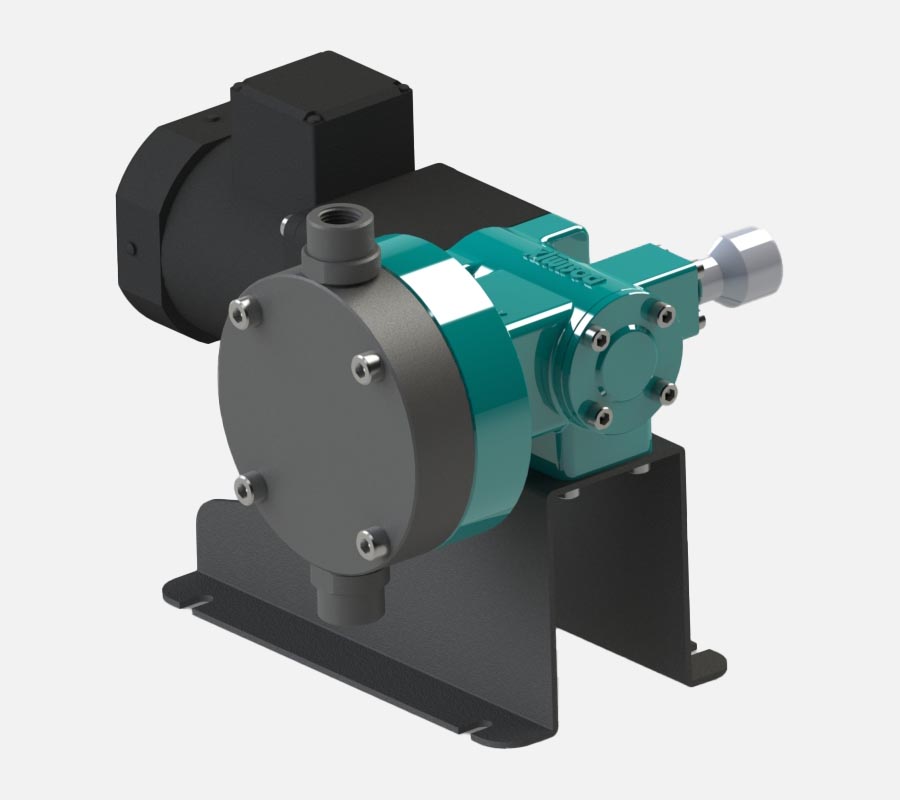
1. Solenoid-Driven Diaphragm Dosing Pumps
Ideal for small to medium-sized commercial RO plants (ranging from 250 LPH to 10,000 LPH flow rates). These pumps utilize a high-quality electromagnetic solenoid drive that moves a robust Teflon (PTFE) diaphragm.
- Flow Rates: From 1.0 LPH to 20 LPH
- Discharge Pressure: From 1.0 LPH to 20 LPH
- Key Advantage: Near-zero maintenance, compact footprint, and highly responsive stroke frequency control.
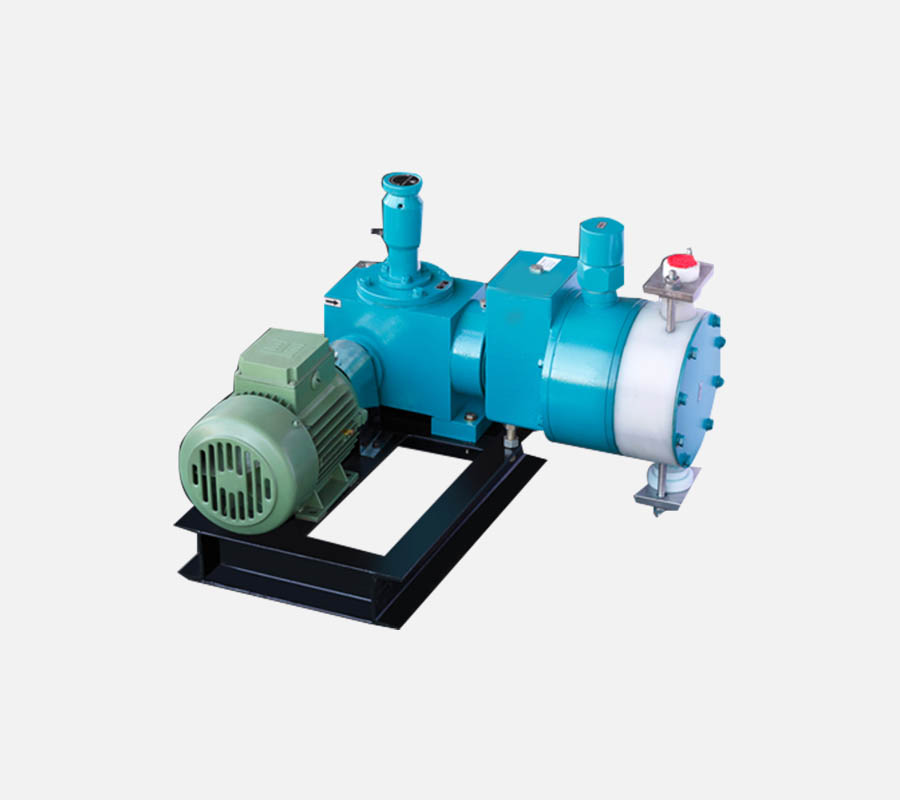
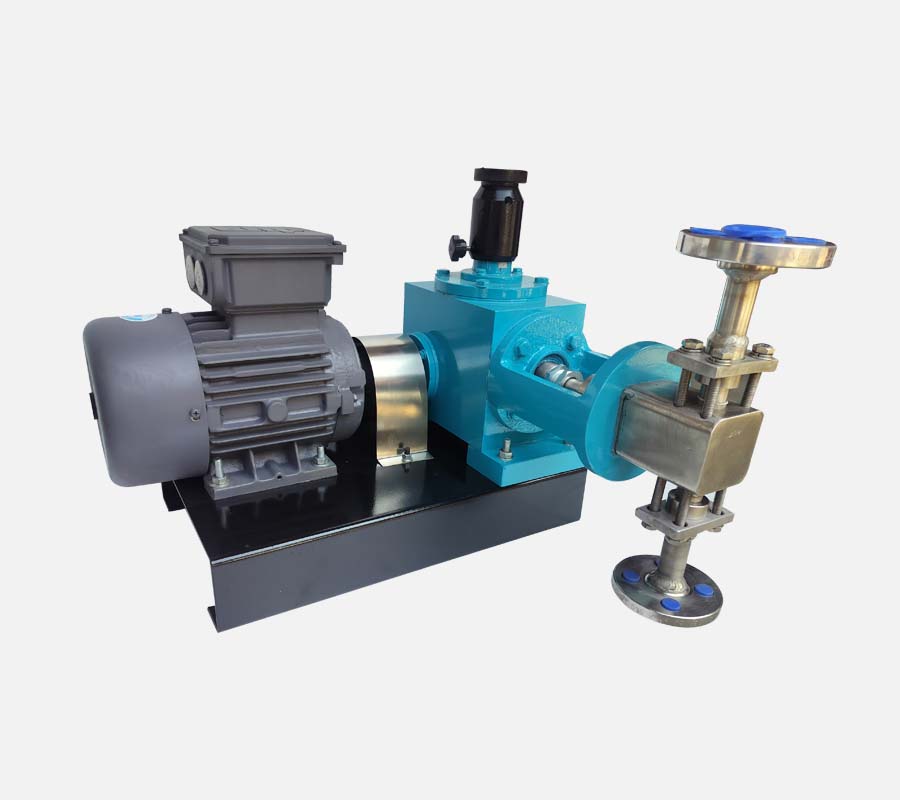
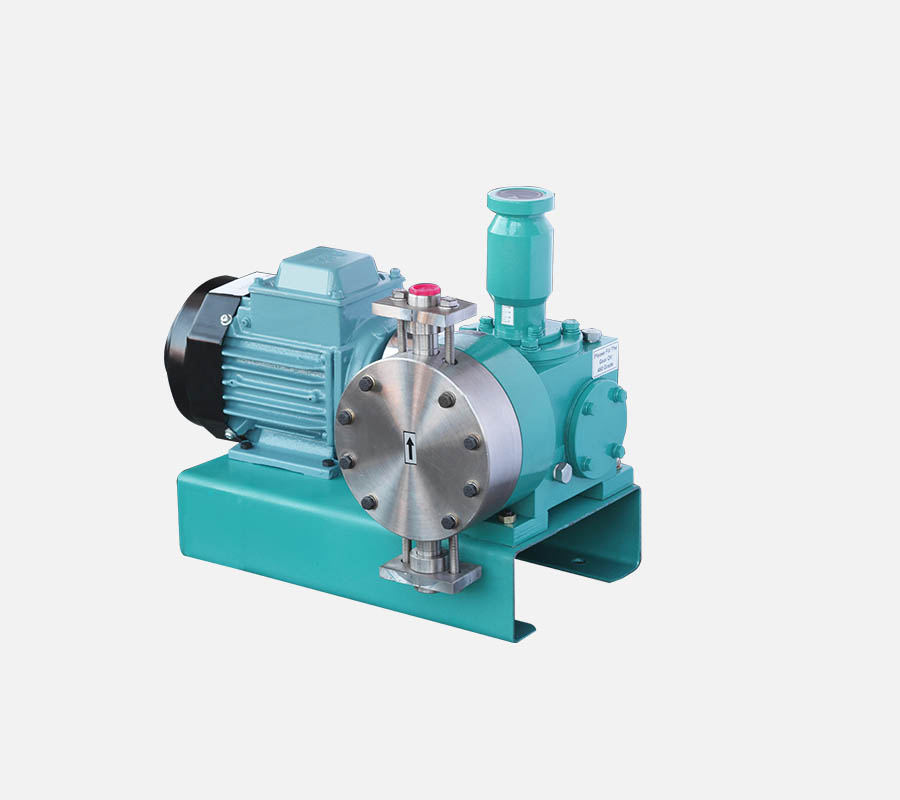
2. Motor-Driven Diaphragm Dosing Pumps
Designed for heavy-duty industrial RO plants, multi-effect evaporators, and large-scale municipal water treatment facilities. Powered by robust electric motors, these pumps handle continuous high-volume chemical injection.
- Flow Rates: Up to 500 LPH
- Discharge Pressure: Up to 20 bar
- Key Advantage: Continuous duty performance, rugged gearbox design, & highly consistent stroke adjustment even under variable backpressure.
Why Choose Dosimix Technologies? (What We Do Differently to Beat Competitors)
If you search for a Dosing Pump Manufacturer in India, you will find dozens of suppliers. However, most of them sell generic chemical pumps rebranded for water treatment. Here is how Dosimix Technologies solves the exact pain points that other manufacturers ignore:
1. True Chemical-Resistant Liquid Ends (No Corrosive Leaks)
Different RO chemicals have highly aggressive chemical profiles. A pump head that works perfectly for antiscalants will degrade quickly if used for concentrated sulfuric acid or chlorine.
- We offer liquid ends in PVDF, PP, PTFE, and SS-316.
- Our seals are made of premium Viton or EPDM, ensuring that corrosive chemicals never leak into the pump motor or solenoid housing.
2. Double-Diaphragm Teflon (PTFE) Technology
Most competitors use cheap composite rubber diaphragms with a thin layer of coating. When this coating wears off, the diaphragm ruptures, causing dangerous chemical spills.
- Dosimix pumps feature solid, multi-layered PTFE (Teflon) diaphragms that are bonded to a robust metal core.
- This design offers unmatched flexibility, mechanical strength, and complete chemical inertness, resulting in a lifespan up to three times longer than standard industry diaphragms.
3. Built-In Air Release Valve (Zero Air-Lock Issues)
Gaseous chemicals like Sodium Hypochlorite (chlorine) tend to release gas bubbles inside the pump head. This causes “air-locking”—the pump cycles, but no chemical is actually pushed into the line.
- Our custom-designed pump heads feature a integrated manual air bleed valve.
- This allows operators to easily prime the pump and clear out trapped air bubbles in seconds, without disconnecting any chemical feed lines.
4. Flawless Performance Under Variable Pressure
In an RO plant, the feed pressure fluctuates based on raw water quality, cartridge filter clogging, and pump speeds. Generic dosing pumps inject varying amounts of chemical as pressure changes.
- Dosimix pumps are designed with double ball check valves on both the suction and discharge ports.
- This guarantees that even if your RO feed line pressure spikes, the pump maintains its set dosing rate with an accuracy of ±1%
Chemical Compatibility Guide for RO Plant Dosing
To help you choose the correct model, our engineering team has mapped out exactly how Dosimix pumps handle the five essential chemicals used in industrial RO pre-treatment.
Chemical Used | Primary Purpose | Recommended Pump Materials |
Sodium Hypochlorite (Chlorine) | Disinfection and bio-control of microorganisms in RO feed water | PVDF Pump Head, Viton Seals, Ceramic Ball Valves |
Antiscalant (Polymer-based) | Prevents calcium, magnesium, and silica scale formation on RO membranes | PP Pump Head, EPDM Seals, PTFE Diaphragm |
Sodium Metabisulfite (SMBS) | Removes residual chlorine to protect polyamide RO membranes | PP or PVDF Pump Head, Viton Seals |
Sulfuric Acid / Hydrochloric Acid | pH adjustment to control scaling and improve silica solubility | PVDF Pump Head, PTFE Diaphragm, Hastelloy-C Valves |
Caustic Soda (NaOH) | pH correction, neutralization, and alkalinity control | SS-316 or PVDF Pump Head, PTFE Seals |
The Dosimix Advantage
When modern procurement teams the best fluid handling solutions, they look for clarity, verifiable reliability, and real problem-solving capabilities. Here is what sets our RO plant dosing pumps apart from conventional market alternatives.
Common Market Competitors | Dosimix Technologies RO Dosing Pumps |
Plastic pump heads often crack, deform, or degrade under continuous exposure to aggressive chemicals and operating pressure. | Manufactured with high-grade PTFE, PVDF, and SS316 liquid ends that deliver outstanding corrosion resistance, longer service life, and leak-free performance. |
Flow rates fluctuate as system back pressure changes, resulting in inconsistent chemical dosing and reduced treatment efficiency. | Positive displacement diaphragm technology ensures precise, consistent dosing accuracy regardless of pressure variations. |
Programming and calibration are often complex, requiring experienced technicians for setup and maintenance. | Available with simple manual stroke adjustment and intuitive digital controls, allowing quick commissioning and easy on-site operation. |
How a Dosing Pump Works in an RO Plant
A dosing pump plays an important role in maintaining the efficiency of an RO (Reverse Osmosis) plant. Its job is to inject a precise amount of chemical into the water line before, during, or after the RO treatment process.
The pump draws chemical from a storage tank and delivers it at a controlled flow rate. Because the dosing quantity remains consistent, the water treatment process becomes more reliable, reducing human error and preventing chemical overuse.
The exact dosing point depends on the application and the type of chemical being used. For example, antiscalant is generally injected before the RO membranes to reduce scaling, while sodium hypochlorite or pH correction chemicals may be dosed at different stages based on the treatment process.
The result is a stable water treatment system that performs efficiently every day with lower operating costs and better water quality.
Simple Installation & Maintenance Guidelines for Operators
To ensure your Dosimix Technologies pump operates reliably for years, our engineering team recommends following these straightforward installation and maintenance steps:
Correct Foot Valve Placement
Always install the chemical foot valve and strainer at least 2 inches above the bottom of your chemical storage tank. This prevents the pump from drawing in heavy settled sludge or undissolved chemical crystals that could clog the internal suction valves.
Routine Valve Inspection
Chemical crystals can occasionally deposit on the suction and discharge valve balls if the system sits idle for long periods. Checking and rinsing the valve assemblies with clean water every few months prevents backflow issues and maintains consistent dosing accuracy.
Using Proper Injection Fittings
Always utilize the injection valve assembly provided with your pump at the point of injection on the main RO pipe. This valve prevents the process water from backing up into your chemical line and acts as a minor backpressure provider to ensure uniform fluid movement.
Why Dosimix Technologies is the Preferred Dosing Pump Manufacturer in India
When purchasing a dosing pump, buyers are investing in the long-term performance of their RO plant. The right manufacturer provides not only a reliable product but also dependable technical support, consistent quality, and timely service.
At Dosimix Technologies, we focus on delivering complete dosing solutions that help industries improve operational efficiency and reduce maintenance costs. Our manufacturing process emphasizes precision, durability, and dependable performance so customers receive equipment they can trust.
What Makes Dosimix Technologies Different?
- Manufacturer with expertise in water treatment dosing applications
- High-quality products designed for long service life
- Accurate and consistent chemical dosing
- Custom-built solutions for different industries
- Competitive factory-direct pricing
- Technical guidance before purchase
- Fast delivery across India
- Reliable spare parts availability
- Customer-focused approach from enquiry to installation
We believe that every customer deserves a dosing solution that performs reliably from the first day of operation.
Secure Your Reverse Osmosis Investment with Dosimix Technologies
Purchasing an industrial pump shouldn’t involve guesswork. By partnering with an experienced Dosing Pump Manufacturer in India, you gain access to rugged equipment, readily available spare parts, and dedicated engineering support to keep your operations running smoothly.
Our pumps are designed to optimize chemical consumption, eliminate membrane damage, and provide trouble-free operation across all water treatment setups.
Ready to Order or Need Technical Assistance?
Let Dosimix Technologies help you build a more efficient, reliable, and cost-effective RO water treatment system with precision-engineered dosing pumps manufactured in India.
FAQs
A dosing pump in an RO (Reverse Osmosis) plant is used to inject a precise quantity of treatment chemicals into the water system. It ensures accurate dosing of chemicals such as antiscalants, sodium hypochlorite, sulfuric acid, hydrochloric acid, sodium metabisulfite, caustic soda, and pH correction chemicals. Accurate dosing protects RO membranes, improves water quality, minimizes chemical wastage, and increases the overall efficiency of the water treatment process.
An RO dosing pump can safely dose a wide range of water treatment chemicals, including:
- Antiscalant
- Sodium Hypochlorite (Chlorine)
- Sodium Metabisulfite (SMBS)
- Sulfuric Acid
- Hydrochloric Acid (HCl)
- Caustic Soda (NaOH)
- pH Correction Chemicals
- Cleaning Chemicals (CIP Chemicals)
- Disinfectants
- Other specialty water treatment chemicals
The pump material should always be selected based on the chemical compatibility to ensure long service life and safe operation.
Accurate chemical dosing prevents membrane scaling, fouling, corrosion, bacterial growth, and chemical overconsumption. Overdosing increases operating costs and may damage system components, while under-dosing can reduce water quality and shorten membrane life. A precision dosing pump maintains consistent chemical injection regardless of pressure fluctuations, ensuring stable plant performance.
The best dosing pump depends on the plant capacity and application.
- Solenoid Diaphragm Dosing Pumps are ideal for small and medium RO plants requiring compact size and precise low-flow dosing.
- Motor Driven Diaphragm Dosing Pumps are recommended for industrial RO plants requiring continuous operation, higher flow rates, and higher discharge pressures.
Selecting the correct pump depends on flow rate, operating pressure, chemical type, and application requirements.
When selecting an RO dosing pump, consider the following factors:
- Required flow rate (LPH)
- Maximum discharge pressure (Bar)
- Chemical compatibility
- Pump head material (PVDF, PP, PTFE, SS316)
- Seal material (Viton or EPDM)
- Manual or digital control
- Required dosing accuracy
- Plant operating conditions
Choosing the right combination ensures reliable performance, lower maintenance, and longer equipment life.
Different chemicals require different wetted materials for maximum durability.
Chemical | Recommended Materials |
Sodium Hypochlorite | PVDF Pump Head, Viton Seals |
Antiscalant | PP Pump Head, EPDM Seals |
Sodium Metabisulfite | PP or PVDF Pump Head |
Sulfuric Acid | PVDF Pump Head with PTFE Diaphragm |
Hydrochloric Acid | PVDF Pump Head with Hastelloy Valves |
Caustic Soda | SS316 or PVDF Pump Head |
Proper material selection prevents corrosion, leakage, and premature pump failure.
PTFE (Teflon) diaphragm dosing pumps offer several advantages:
- Excellent chemical resistance
- Leak-free operation
- Longer diaphragm life
- Low maintenance
- High dosing accuracy
- Suitable for aggressive chemicals
- Better resistance to corrosion
- Reliable performance under continuous operation
These features make PTFE diaphragm pumps ideal for industrial RO applications.
Dosimix Technologies dosing pumps are engineered to provide dosing accuracy of approximately ±1%, even under varying system pressure conditions. Their positive displacement diaphragm mechanism and precision check valve design ensure stable and repeatable chemical injection, reducing process variations and improving treatment efficiency.
A dosing pump may lose prime because of:
- Air trapped inside the pump head
- Gas released by chemicals like sodium hypochlorite
- Loose suction connections
- Empty chemical tank
- Clogged foot valve
- Worn check valves
Using an integrated air bleed valve, proper installation, and routine maintenance helps maintain reliable priming and uninterrupted chemical dosing.
Routine maintenance includes:
- Cleaning the foot valve and suction strainer
- Inspecting suction and discharge valves
- Checking diaphragm condition
- Verifying injection valve operation
- Inspecting seals and tubing
- Flushing the pump after handling aggressive chemicals
- Calibrating flow rate periodically
Regular preventive maintenance improves dosing accuracy and extends pump service life.
Dosimix Technologies manufactures high-performance dosing pumps specifically designed for industrial water treatment applications. Key advantages include:
- High dosing accuracy
- PTFE diaphragm technology
- Chemical-resistant liquid ends
- PVDF, PP, PTFE, and SS316 material options
- Leak-resistant design
- Custom-built dosing solutions
- Competitive factory pricing
- Technical application support
- Fast delivery across India
- Reliable after-sales service and spare parts availability
These features help industries achieve safer, more efficient, and cost-effective chemical dosing.
Dosimix Technologies dosing pumps are widely used in:
- Reverse Osmosis (RO) Plants
- Water Treatment Plants
- Wastewater Treatment Plants
- Industrial Process Water Systems
- Boiler Water Treatment
- Cooling Tower Water Treatment
- Pharmaceutical Water Systems
- Food & Beverage Industries
- Chemical Processing Plants
- Textile Industries
- Power Plants
- Commercial Water Purification Systems
They are suitable for both small commercial installations and large industrial water treatment facilities.
There are many different types of dosing pumps, each with its own advantages and disadvantages. The most common types of dosing pumps include:
- Plunger pumps: Plunger pumps are the most basic type of dosing pump. They work by moving a plunger back and forth in a chamber, which draws in and then forces out the fluid. Plunger pumps are typically very accurate and reliable, but they can be noisy and require regular maintenance.
- Diaphragm pumps: Diaphragm pumps work in a similar way to plunger pumps, but instead of using a plunger, they use a diaphragm. The diaphragm is a flexible membrane that is moved back and forth by a piston or motor. Diaphragm pumps are typically quieter than plunger pumps and require less maintenance, but they are not as accurate.
- Peristaltic pumps: Peristaltic pumps work by squeezing a flexible tube with a rotor. As the rotor turns, the tube is squeezed, which draws in and then forces out the fluid. Peristaltic pumps are very accurate and gentle on fluids, but they are also the most expensive type of dosing pump.