

How Do Modern Dosing Systems Prevent Costly Chemical Spills and Waste?
Running an industrial plant in India comes with a unique set of challenges. Whether you are in water treatment, pharmaceuticals, food processing, textiles, or chemical manufacturing, every single drop of raw material counts.
But here is a question that every plant manager and purchase head must face: How much money is your factory losing every month due to manual chemical handling, accidental spills, and over-dosing?
Chemicals are expensive. When your workers measure and pour them manually, errors are bound to happen. A small spill here and a slight over-estimation there might seem minor on a daily basis. However, over a year, these small losses add up to lakhs of rupees in wasted raw materials, costly cleanups, regulatory fines, and production downtime.
The solution to this massive industrial headache is simple: upgrading to automated Dosing Systems.
In this comprehensive guide, we will explore how modern dosing technology stops chemical waste, prevents hazardous spills, protects your workforce, and dramatically improves your bottom line. We will also help you understand why partnering with a trusted Dosing System Manufacturer is the smartest financial decision your company can make this year.
The True Cost of Manual Chemical Dosing in Indian Industries
For decades, many factories in India have relied on manual labor to mix and feed chemicals into their production lines. Workers use buckets, manual valves, and basic measuring cups. While this might seem like a low-cost method on paper, it is actually one of the biggest financial leaks in your operation.
Let’s look at the real costs associated with manual chemical dosing:
1. The High Cost of Chemical Waste (Over-Dosing)
Without automated control, operators tend to “over-dose” chemicals to be safe. For example, in wastewater treatment, adding too much coagulant or chlorine wastes expensive chemical stock. If you use 10% more chemicals than required every day, you are literally throwing 10% of your chemical budget down the drain.
2. Batch Rejection and Product Spoilage (Under-Dosing)
On the other side, under-dosing is just as dangerous. If a batch of textile dye, pharmaceutical formulation, or food product does not receive the exact amount of chemical agent required, the entire batch may fail quality control. Rejecting a complete production batch costs time, labor, and massive material waste.
3. Costly Environmental Spills and PCB Fines
The State Pollution Control Boards (PCBs) in India have become extremely strict. Accidental chemical spills that leak into groundwater or public drains can result in heavy financial penalties, legal trouble, and even temporary factory shutdown orders.
4. Workplace Hazards and Employee Medical Costs
Many industrial chemicals are highly corrosive, toxic, or acidic. Manual pouring exposes your workers to dangerous fumes and skin contact. A single accidental splash can lead to serious injuries, medical expenses, labor union issues, and negative publicity for your brand.
How Modern Dosing Systems Prevent Spills and Stop Waste
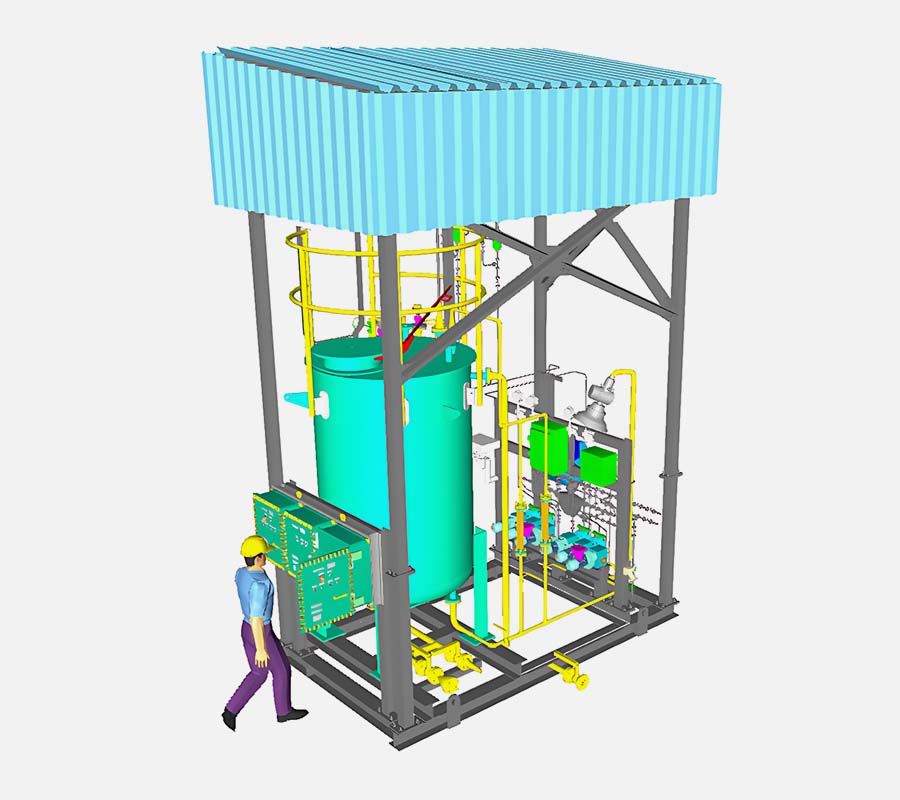
A modern Dosing System is a fully integrated, closed-loop machine designed to deliver a precise volume of liquid chemical into a process at specific time intervals. Here is exactly how they eliminate human error and protect your profits:
Feature of Manual Dosing | How Modern Dosing Systems Solve It | Business Benefit |
Hand-pouring from drums | Closed-loop suction and piping | Zero Spills: Chemicals never touch the open air or floor. |
Eyeballing measurements | High-precision metering pumps | Perfect Accuracy: Saves up to 20-30% on chemical costs. |
No safety alarms | Automated leak detection and sensors | Instant Shutoff: Stops leaks before they turn into major disasters. |
Inconsistent flow rates | Smart control panels and variable drives | Uniform Quality: No rejected batches or wasted production time. |
1. Closed-Loop Systems Eliminate Transfer Spills
Most chemical spills happen when workers transfer liquids from large storage drums to smaller dosing tanks. Modern Dosing Systems completely eliminate this step. They use specialized suction lances placed directly inside the chemical drum, pumping the liquid through secure, sealed piping directly into your main process line. The chemical is never exposed to the environment, completely eliminating splash risks.
2. Pinpoint Accuracy Stops Chemical Waste
Modern systems use highly accurate metering pumps (such as diaphragm or plunger pumps) controlled by smart electronic panels. You can program the exact flow rate required (e.g., 5.5 liters per hour). The system delivers exactly that amount—no more, no less. By stopping over-dosing, most Indian factories recover the investment cost of their new system within just a few months.
3. Smart Leak Detection and Auto-Shutoff
What happens if a pipe cracks or a seal fails? In a manual setup, the chemical will keep leaking until someone notices it. Modern systems are equipped with safety relief valves, pressure switches, and leak sensors. If there is a sudden drop in pressure or a detected leak, the system automatically shuts down and triggers a loud alarm, stopping a minor leak from becoming a major environmental hazard.
4. Robust Materials Built for Harsh Chemicals
A common reason for leaks in cheap setups is using standard plastic or rubber parts that dissolve when exposed to strong acids or alkalis. Professional Dosing Systems are custom-built using highly resistant materials like PP, PVDF, PTFE, or Stainless Steel (SS316) based on the specific chemical you are handling. This ensures long-term reliability and zero corrosive leaks.
Why You Need a Reliable Dosing System Manufacturer
When looking to install a chemical dosing setup, many buyers make the mistake of purchasing cheap, unbranded pumps and assembling the system locally. This often leads to frequent breakdowns, inaccurate dosing, and early system failure.
To get the best return on your investment, you must partner with an established, engineering-focused Dosing System Manufacturer.
What to Look for in a Dosing System Manufacturer in India:
- Custom Engineering Capability: Your factory’s chemical requirements are unique. A top-tier manufacturer won’t just sell you a standard box; they will study your flow rates, chemical properties, and pressure requirements to build a system specifically for you.
- Quality Components: Ensure the manufacturer uses high-quality, industrial-grade pumps, valves, and piping that can withstand the demanding conditions of Indian industrial environments.
- Robust Safety Features: The system must include safety relief valves, pulsation dampeners, and clear calibration cylinders so your operators can verify dosing accuracy safely.
- Pan-India Support and Service: Industrial machines require regular maintenance. Choose a manufacturer that can quickly provide spare parts and on-site service anywhere in India.
Dosimix Technologies: The Best Chemical Dosing Systems Manufacturers in India
If you are looking to secure your plant against chemical waste and ensure 100% operational safety, look no further than Dosimix Technologies.
As one of the leading Chemical Dosing Systems Manufacturers in India, Dosimix Technologies specializes in designing and manufacturing world-class, highly reliable dosing solutions for a wide range of Indian industries.
Why Choose Dosimix Technologies?
- Unmatched Engineering Expertise: At Dosimix Technologies, we don’t just supply equipment; we solve your chemical handling problems. Our team designs systems that fit perfectly into your existing process layout.
- Premium Quality & Zero Leakage: We use only the highest grade of chemical-resistant materials. Every system undergoes rigorous pressure and performance testing before it leaves our facility.
- Cost-Effective Solutions: We understand the Indian market. Our systems are competitively priced, offering European-standard reliability at highly affordable rates.
- Complete Nationwide Reach: No matter where your factory is located in India—whether it’s Gujarat, Maharashtra, Tamil Nadu, Karnataka, NCR, or West Bengal—Dosimix Technologies provides swift delivery, installation guidance, and unmatched after-sales support.
By choosing Dosimix Technologies, you are not just buying a machine—you are buying peace of mind, operational safety, and a guaranteed reduction in your monthly chemical bills.
Protect Your Profits and Upgrade Your Factory Today!
In today’s competitive industrial landscape, wasting expensive chemicals and risking environmental fines is a recipe for business failure. Modernizing your plant with an automated chemical dosing setup is no longer a luxury—it is an absolute necessity to stay profitable and compliant.
Are you ready to stop chemical waste, prevent costly spills, and boost your production quality?
Partner with the premier Dosing System India specialist. Contact the experts at Dosimix Technologies today for a free, no-obligation technical consultation. Let our engineers design a high-performance chemical dosing system that saves you money from day one.
Contact Dosimix Technologies today to get an instant quote and secure your plant’s future!
Contact US : +91 76007 37948 , sales@dosimixtechnologies.com
FAQs
Modern dosing systems prevent chemical spills through closed-loop transfer systems, sealed piping, leak detection sensors, and automatic shutoff mechanisms. Chemicals are transferred directly from storage tanks or drums into the process line without manual handling, significantly reducing spill risks, workplace hazards, and environmental contamination.
Yes. A properly calibrated dosing system delivers the exact amount of chemical required for a process, eliminating over-dosing and under-dosing. Many industries achieve chemical savings of 20–30% by replacing manual dosing methods with automated chemical dosing systems.
Automated dosing systems are widely used in:
- Water and wastewater treatment
- Chemical manufacturing
- Pharmaceuticals
- Food and beverage processing
- Textile manufacturing
- Power plants
- Pulp and paper industries
- Cooling tower treatment systems
These industries rely on precise chemical dosing for product quality, safety, and regulatory compliance.
A dosing system minimizes employee exposure to hazardous chemicals by automating chemical transfer and injection. Workers no longer need to manually measure or pour corrosive, toxic, or acidic liquids, reducing the risk of burns, inhalation hazards, and workplace accidents.
A high-quality chemical dosing system should include:
- Precision metering pumps
- Leak detection sensors
- Automatic shutoff controls
- Chemical-resistant materials (PP, PVDF, PTFE, SS316)
- Calibration cylinders
- Safety relief valves
- PLC or smart control panels
- Pulsation dampeners
These features ensure accurate dosing, long service life, and safe operation.
Leak detection systems continuously monitor pressure, flow rate, and chemical containment areas. If a leak, pipe failure, or abnormal pressure drop is detected, the system automatically activates alarms and shuts down the dosing pump to prevent chemical loss, environmental damage, and safety incidents.
Accurate chemical dosing ensures consistent product quality, reduces raw material consumption, prevents batch failures, and helps maintain process efficiency. Incorrect dosing can lead to rejected batches, production downtime, increased operating costs, and non-compliance with industry standards.
Automated dosing systems reduce the risk of accidental chemical discharge, overuse of treatment chemicals, and environmental contamination. By maintaining controlled chemical injection rates and preventing spills, they help facilities meet Pollution Control Board (PCB) regulations and environmental compliance requirements.
When selecting a dosing system manufacturer, evaluate:
- Industry experience
- Custom engineering capabilities
- Quality certifications
- Material compatibility expertise
- After-sales support
- Spare parts availability
- Installation assistance
- Technical consultation services
A reliable manufacturer will design a system tailored to your specific process requirements rather than offering a one-size-fits-all solution.
Most industrial facilities recover their investment through reduced chemical consumption, fewer product rejections, lower maintenance costs, improved worker safety, and reduced environmental risks. Depending on chemical usage and production volume, many companies achieve ROI within 6–18 months of installation.